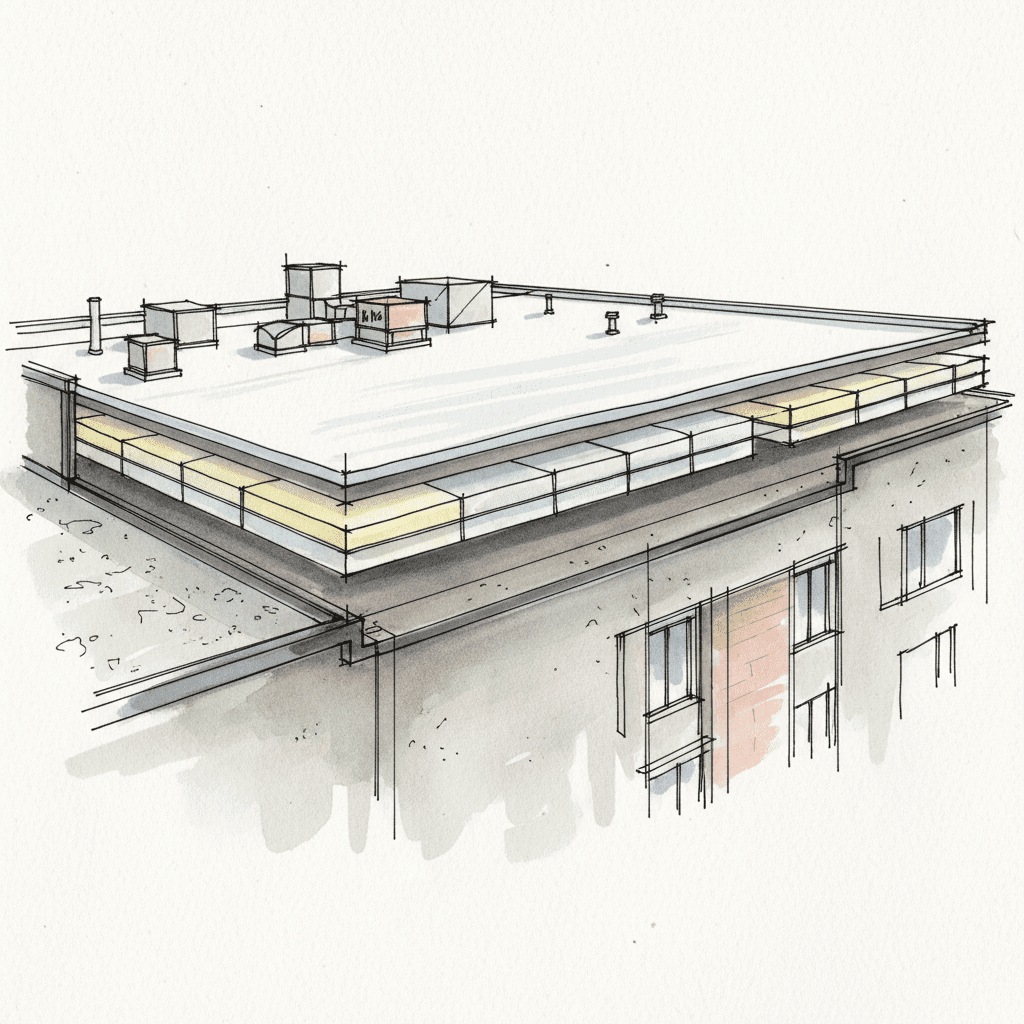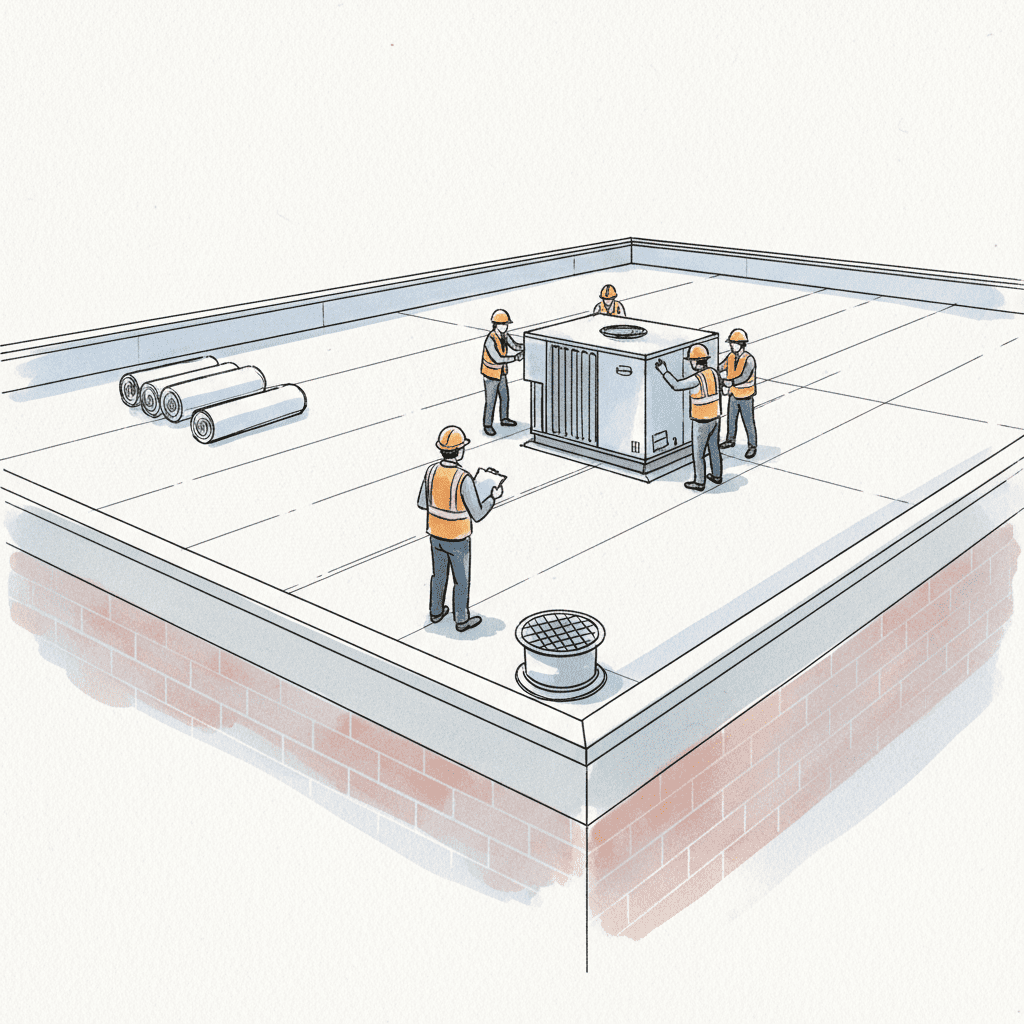

A seasonal roof inspection protocol is a systematic, biannual examination of a building’s top covering (kg:/m/06hyd) to verify its structural integrity and its capacity to provide protection against environmental forces like rain, snow, sunlight, temperature extremes, and wind. This protocol functions as a preventative maintenance procedure designed to identify and rectify minor issues before they escalate into catastrophic failures. For the meticulous homeowner, it transforms roof ownership from a source of anxiety into a managed asset.
Why a Systematic Roof Inspection Protocol is Non-Negotiable
Your roof is the primary component of your home’s building envelope. Its failure compromises every other system and asset within the structure. Adopting a formal inspection protocol is not an expense; it is a risk mitigation strategy. It is the only logical method to ensure the long-term performance and protection your home requires.
The High Cost of Reactive Maintenance vs. Proactive Oversight
Reactive maintenance is the industry standard. A homeowner ignores their roof until a leak appears in the ceiling. This approach is fundamentally flawed. By the time water is visible inside, significant and costly damage has already occurred to decking, insulation, and structural supports. Emergency repairs are always more expensive, chaotic, and disruptive than planned maintenance.
Proactive oversight operates on a simple cost-benefit analysis. A minor investment in a biannual inspection identifies a cracked pipe boot, a failing sealant, or a clogged gutter. The repair is small, predictable, and controlled. This action prevents a multi-thousand-dollar emergency project involving water damage remediation, mold abatement, and structural repair. Predictability is the goal. Chaos is the enemy.
Defining Your Inspection Cadence: Spring & Fall Checkpoints
A roof faces distinct threats based on the season. A biannual inspection schedule is therefore the required minimum, with each inspection timed to prepare the system for the coming environmental stresses.
| Inspection Period | Primary Objective | Key Focus Areas |
|---|---|---|
| Spring (Post-Winter) | Assess winter damage; prepare for summer heat, hail, and high winds. | Loose or missing shingles from winter storms, hail impact marks, deteriorated flashing seals, and granule loss. |
| Fall (Pre-Winter) | Clear organic debris; prepare for snow load, ice dams, and freezing temperatures. | Clogged gutters and downspouts, overhanging tree limbs, integrity of seals around roof penetrations. |
Structural Integrity Analysis: The Support System Overhead
A roof is more than its surface material. It is a complete system of structural supports, including rafters, trusses, and decking. The failure of this support system is a catastrophic event. Inspection must begin from the inside out.
Interior Attic Inspection: Detecting Sagging and Water Stains
Your attic provides direct forensic evidence of your roof’s health. With a powerful flashlight, perform a systematic check. Look for dark stains or streaks on the underside of the roof decking, which indicates water intrusion. Scan the lines of the roof deck between the rafters; any visible sagging signifies moisture-weakened sheathing that may require replacement. You must also verify that insulation is not blocking soffit vents, as proper ventilation is critical to preventing moisture buildup and heat degradation.
Exterior Assessment: Evaluating Eaves and Soffits for Damage
The eaves, which include the fascia boards and soffits, are the termination point of your roof structure. They are highly vulnerable to water damage from overflowing gutters or ice dams. Inspect these areas for peeling paint, soft spots indicating wood rot, and any signs of pest or insect infestation. Compromised eaves can allow water to bypass the gutters and penetrate the wall structure of your home.
Surface Material Assessment: Quantifying Environmental Impact
The roofing material—most commonly asphalt shingles—is the primary shield against the elements. Its condition dictates the entire system’s ability to function. This part of the inspection quantifies the rate of degradation.
Granule Loss Analysis: Estimating Remaining Shingle Life
Asphalt shingles are coated with a layer of ceramic granules. These granules serve a single, critical purpose: to block UV radiation from degrading the underlying asphalt. As a shingle ages, it loses these granules. Check your gutters and downspout outlets for an accumulation of these sand-like particles. Significant collection indicates the shingle is nearing the end of its functional lifespan. Exposed asphalt becomes brittle and cracks, creating a direct path for water.
Identifying Cracks, Curls, and Blisters from Temperature Extremes
Constant expansion and contraction from daily and seasonal temperature swings cause material fatigue. This fatigue manifests in several ways:
- Cracking: Stress fractures that penetrate the shingle, allowing water intrusion.
- Curling: The edges of the shingle lift, breaking the sealant bond and making it highly susceptible to wind uplift.
- Blistering: Bubbles on the shingle surface caused by trapped moisture or manufacturing defects, which can pop and expose the asphalt.
These are direct indicators that the material is failing to protect against temperature extremes.
Wind Uplift Verification: Checking for Loose or Missing Shingles
Shingles are sealed to the course below them with a strip of thermally activated asphalt sealant. Over time, or during high wind events, this seal can fail. A shingle with a broken seal can be lifted by the wind, leading to creasing, tearing, or complete removal. Each missing shingle is a critical breach in your roof’s water-shedding armor. Systematically check for any shingles that appear lifted or are no longer adhered to the roof.
Water Diversion System Audit: Protection Against Rain and Snow
A roofing system’s primary function is to control and divert water away from the building structure. The gutters and flashing are the essential components of this water management system. Their failure negates the effectiveness of the entire roof.
Gutter and Downspout Functionality: Clearing Obstructions and Ensuring Flow
Gutters are not an optional accessory; they are a critical subsystem. They must be completely clear of leaves, pine needles, and other debris to function. A clogged gutter causes water to overflow, saturating the fascia board and potentially backing up under the shingles at the eave. This is a primary cause of ice dams in winter. Verify that gutters are securely attached to the fascia and that downspouts are clear and discharge water at least four to six feet away from the foundation.
Flashing Integrity Check: Securing Seams Against Water Intrusion
Anywhere the plane of the roof is interrupted—by a chimney, a wall, a skylight, or another roof section (a valley)—metal flashing is used to create a waterproof seal. Flashing failure is one of the most common sources of roof leaks. Inspect all flashing for signs of rust, loose sections, or separation. Pay close attention to the sealant or caulking used at the edges of the flashing, as it often degrades faster than the metal itself and requires periodic renewal.
Roof Penetration Security: Your System’s Most Vulnerable Points
Every pipe, vent, and skylight that passes through your roof is a necessary but high-risk breach in its protective membrane. These penetrations are sealed with specialized components that have a shorter lifespan than the primary roofing material.
Examining Seals Around Vents, Pipes, and Chimneys
Plumbing stacks are typically sealed with a pipe boot, which consists of a metal flange and a flexible rubber gasket. The rubber gasket is exposed to direct UV radiation and will crack and deteriorate over time, creating a common and easily preventable leak. Similarly, the flashing around exhaust vents and chimneys must be secure and perfectly sealed to prevent water from following the penetration into the attic.
Skylight Inspection: Verifying Watertight Seals and Glazing
Skylights present multiple potential points of failure. The flashing system around the curb of the skylight must be integrated correctly with the roofing material. The seal between the glass and the frame (the glazing seal) can also fail, leading to leaks or condensation between the panes of glass. Ensure the skylight’s built-in weep holes are clear to allow any collected moisture to drain properly.
Beyond the Checklist: A Process-Driven Approach to Roof Asset Management
This checklist provides a technical framework for inspection. However, execution requires a partner who operates with the same meticulous, process-driven mindset. The standard roofing industry is defined by chaos. Our company is defined by its antithesis: predictable, transparent order.
The Flaw in ‘Get 3 Quotes’: Why Price-Shopping Invites Chaos
The conventional wisdom to ‘get three quotes’ is the single greatest flaw in a homeowner’s decision process. This method optimizes for one variable: the lowest price. It actively encourages contractors to cut corners on materials, labor, and safety to submit the winning bid. The result is the very chaos you seek to avoid: vague scopes of work, surprise upcharges, missed deadlines, and poor communication. Price-shopping is an invitation for disorder.
Our Protocol: The Antidote to Vague Timelines and Poor Communication
We have replaced the chaotic, price-driven model with a transparent, step-by-step methodology. Our process is not a sales pitch; it is a project management protocol designed to deliver a predictable experience. This is the only sane way to manage a critical home construction project.
We conduct a detailed, multi-point inspection to define the exact scope required. No guesswork.
You receive a detailed proposal with a firm, fixed price. There are no surprise charges. Ever.
A single point of contact is assigned to your project, responsible for all logistics and communication.
You receive regular, scheduled updates on progress and next steps. You never have to ask what’s happening.
We conduct a final, meticulous inspection with you to ensure every detail meets our standard and your expectation.
A Partnership for the Meticulous: We Are Not for Everyone
We state this directly: If your primary decision driver is finding the absolute lowest price, we are not the right partner for you. Our process is necessarily more rigorous, our materials are of a higher grade, and our communication standards are absolute. This commitment to eliminating chaos is not for everyone.
Our service is designed exclusively for meticulous homeowners who value order, clarity, and predictability. We partner with clients who view their roof as a critical asset, not a commodity, and who demand a professional, stress-free management experience from start to finish. We provide order for clients who refuse to tolerate chaos.