Roof asset management is a systematic financial and operational approach to maintaining a home’s top covering. It treats the entire roofing system not as a passive component but as a critical asset that requires proactive planning to deliver its primary function: protection against rain, snow, sunlight, extremes of temperature, and wind.
It replaces the high-stress, high-cost cycle of emergency repairs with a predictable, data-driven protocol for maximizing service life and minimizing total lifecycle cost. Your roof is the primary component of your home’s building envelope; its failure compromises every other system and asset within the structure. Managing it accordingly is not optional; it is a fundamental responsibility of homeownership.
A System-Based Approach to Protecting Your Home
Your home is your most significant financial asset. The roof is its first line of defense against environmental forces that seek to degrade that asset. A system-based approach to its management acknowledges this reality. It shifts the paradigm from waiting for a catastrophic failure—a leak, significant storm damage, or structural compromise—to implementing a controlled, documented process that preserves the asset’s value and ensures its performance over a multi-decade timeline.
Defining the Goal
The standard roofing experience is defined by chaos. It begins with an unexpected failure, followed by a frantic search for a contractor, vague timelines, and unpredictable costs. This reactive model is inefficient, expensive, and stressful.
Proactive control is the antidote. It is a methodology built on predictability and financial planning. The goal is to transform the roof from a source of anxiety into a managed asset with a clear budget, a defined maintenance schedule, and a predictable replacement timeline. This eliminates surprises. It provides peace of mind. It is the only logical way to manage a component responsible for protecting hundreds of thousands of dollars of equity.
Is This Guide for You? A Note on Our Process-Driven Philosophy
This manual is written for the meticulous homeowner. It is for the engineer, the project manager, the lawyer—the individual who understands that a superior outcome is the direct result of a superior process. You value clarity, documentation, and predictability. You understand that the true cost of a project is not the initial price but the total lifecycle cost, including the stress and disruption caused by disorganization. We operate on this same principle.
Therefore, we state this directly: If your primary selection criterion for a roofing partner is the absolute lowest price, we are not the right fit for you. Our methodology is built on a level of project management, communication, and quality control that is incompatible with a low-cost model. We actively repel bargain hunters not to be exclusive, but to ensure we can deliver the predictable, stress-free experience our clients demand and deserve.
Anatomy of a Roof System: Deconstructing the Core Components
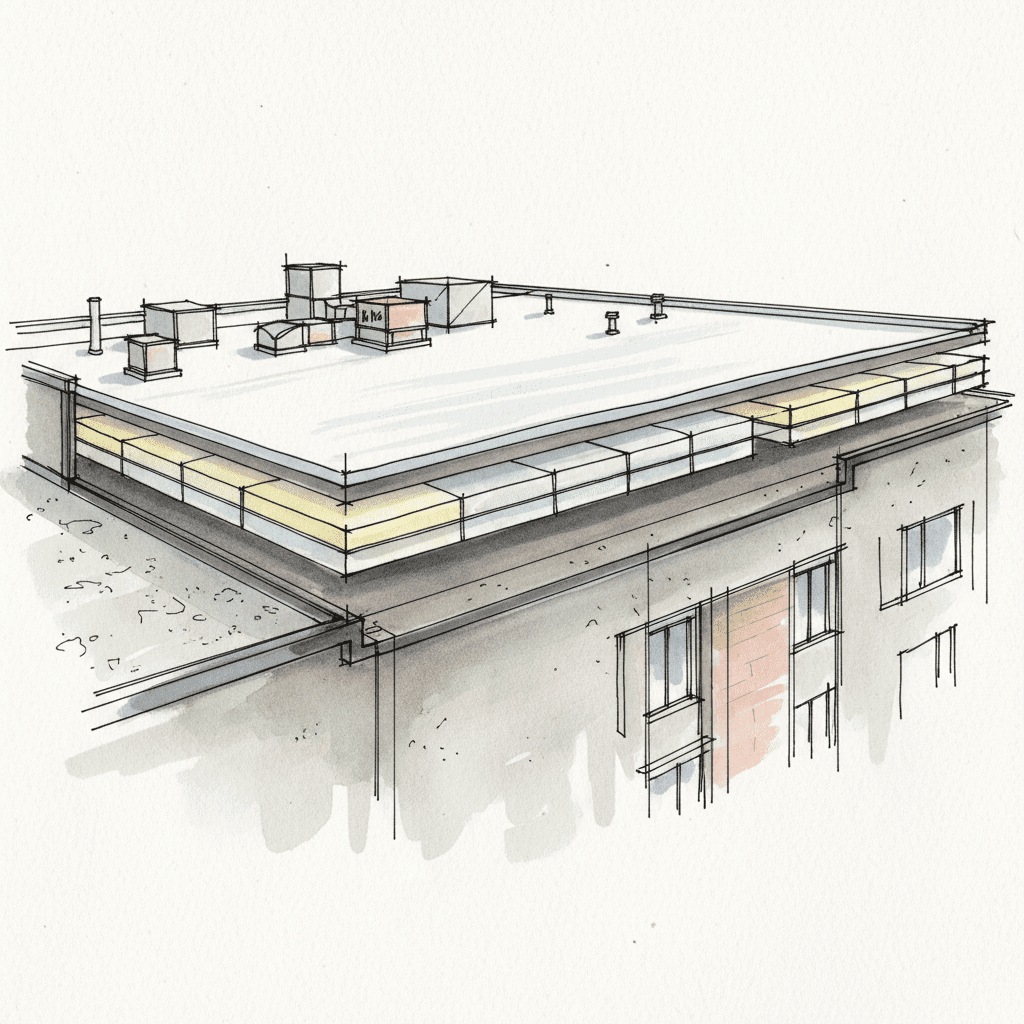
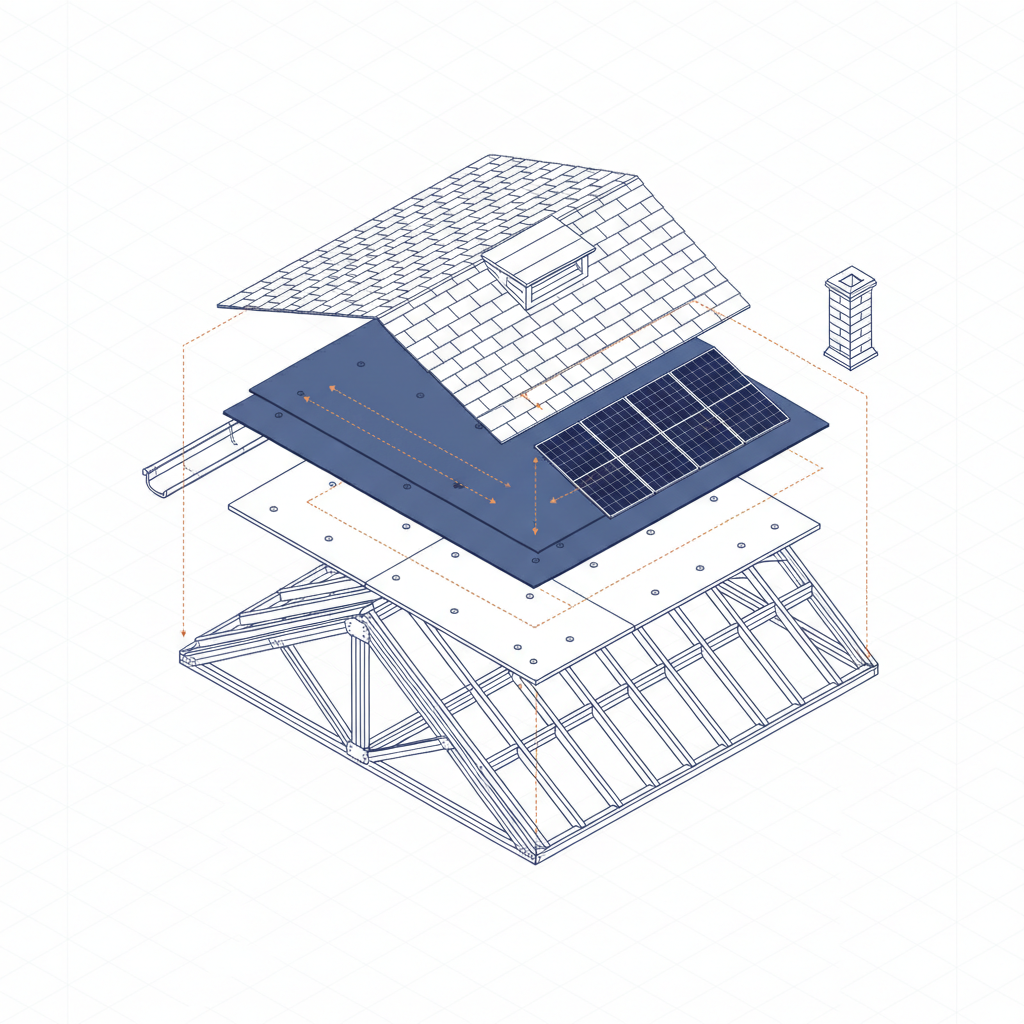
A roof is not a single entity; it is an integrated system of layers and components, each with a specific function. Understanding this anatomy is the first step in managing it effectively. The system functions as a whole to protect the building envelope from environmental loads. Its performance is only as strong as its weakest component.
-
Performance Layer (Ventilation): Manages temperature and moisture within the attic space to prevent condensation, ice dams, and thermal degradation of materials.
-
Protective Layers (Covering & Underlayment): The primary waterproofing and weather-shedding components, including shingles/metal and specialized membranes.
-
Structural Layer (Decking & Framing): The foundational framework of rafters, trusses, and decking that supports all other layers and transfers environmental loads to the building’s walls.
The Structural Layer: Analyzing Decking, Rafters, and Uprights
The structural layer is the skeleton of the roof. It consists of the framing (rafters or trusses) and the roof decking. Rafters and trusses are the load-bearing elements that span the distance between the exterior walls, creating the roof’s slope and shape. They are engineered to support the dead load (the weight of the roof materials themselves) and the live loads (such as snow, wind, and rain). The roof decking, typically OSB or plywood sheathing, is fastened to this framework. Its function is to create a solid, continuous surface for the attachment of the subsequent protective layers and to provide sheer strength against lateral forces like wind.
The Protective Layers: Material Science of Underlayments and Coverings
This is the primary barrier against water ingress. It is a two-part system.
-
The Underlayment: This is the final waterproofing layer. In critical areas like eaves, valleys, and around penetrations, a specialized self-adhering membrane known as an ice and water shield is used. This material seals around fasteners, providing a robust defense against wind-driven rain and ice damming. Over the rest of the roof deck, a synthetic or felt underlayment is installed.
-
The Roof Covering: This is the component visible from the exterior, such as architectural asphalt shingles or standing seam metal panels. While this layer sheds the vast majority of water, it is not technically waterproof. It is a water-shedding system designed to work in concert with the underlayment below to ensure a dry structure.
| Material | Expected Lifespan | Key Attribute | Primary Failure Mode |
| Architectural Asphalt Shingle | 25-30 Years | Cost-effectiveness & Aesthetics | Granule loss & UV degradation |
| Standing Seam Metal | 50+ Years | Durability & Longevity | Sealant failure & fastener issues |
| Synthetic Slate/Tile | 50+ Years | Impact resistance & Appearance | Brittleness with age & UV |
The Performance Layer: Managing Temperature Extremes with Proper Ventilation
The performance of the entire roof system and the energy efficiency of the home depend on proper attic ventilation. A balanced ventilation system consists of intake vents (at the lower edge of the roof, like soffits) and exhaust vents (at or near the peak, like a ridge vent). This system creates a continuous flow of ambient air through the attic space.
Its purpose is twofold:
-
In Summer: It exhausts super-heated air, reducing the load on the home’s cooling system and preventing thermal degradation of the shingles from below.
-
In Winter: It keeps the attic space cold and dry, preventing warm, moist air from the living space from condensing on the underside of the cold roof deck. This mitigation of moisture ingress is critical to preventing mold growth and wood rot. It is also the primary defense against the formation of destructive ice dams.
Quantifying Environmental Threats to Your Roof Asset
The roof’s primary function is to resist constant environmental loads. A proactive management plan requires a clear understanding of these threats and how they degrade roofing materials over time. Each threat targets a specific component of the roof system.
-
Water Ingress Analysis: Water is the primary enemy. It will exploit any weakness in the system. The most common points of failure are not in the main field of the roof but at penetrations and transitions (valleys, chimneys, skylights). These areas are protected by flashing. Flashing failure is the leading cause of leaks.
-
Thermal & UV Degradation: Sunlight (UV radiation) breaks down the petroleum base of asphalt shingles, causing them to become brittle. This is mitigated by ceramic granules. As granules are lost, the decline accelerates. Thermal shock (expansion/contraction) also stresses sealants and fasteners.
-
Wind Uplift Dynamics: Wind does not push on a roof; it pulls (uplift). This force is strongest at the corners and edges. If a single shingle is not properly fastened according to manufacturer specifications, wind can initiate a peeling effect that leads to catastrophic failure.
The Four Pillars of a Proactive Roof Management Protocol
A predictable outcome requires a formal protocol. This four-pillar framework transforms roof management from a series of random events into a disciplined, data-driven process.
- Pillar 1: Comprehensive Roof Audit
Establish a detailed, documented baseline of the roof’s current condition, components, and age.
↓
- Pillar 2: Scheduled Maintenance Cadence
Implement a recurring schedule of inspections and proactive maintenance tasks (e.g., gutter cleaning, sealant checks).
↓
- Pillar 3: Data-Driven Repair/Replace Framework
Use data from the audit and inspections to make logical, cost-benefit decisions about intervention.
↓
- Pillar 4: Full Lifecycle Financial Planning
Develop a long-term budget and capital expenditure forecast for the eventual roof replacement.
Pillar 1: Establishing a Baseline with a Comprehensive Roof Audit
You cannot manage what you do not measure. The first step is a comprehensive condition assessment. This is not a quick glance from the ground. It is a detailed, forensic examination of every component of the roof system. The audit documents the type and age of all materials, the condition of flashings and sealants, the state of the ventilation system, and the integrity of the structural components. A detailed photographic record is created. This baseline data forms the foundation for all future decisions.
Pillar 2: Implementing a Scheduled Maintenance & Inspection Cadence
With a baseline established, a proactive maintenance schedule is implemented. This should occur at least annually, preferably biannually (spring and fall). Key tasks include: clearing all debris from the roof surface and gutters to ensure proper water flow; inspecting all sealant at flashings and penetrations for signs of cracking or deterioration; checking for loose or damaged shingles, especially after significant weather events; and ensuring all vents are clear and functional.
Pillar 3: A Data-Driven Framework for Repair vs. Replace Decisions
Decisions regarding intervention must be based on data, not emotion. The primary metric is the roof’s Remaining Service Life (RSL).
-
Repair: If the RSL is high (>10 years) and the damage is localized, a targeted repair is logical.
-
Replace: If the roof is nearing the end of its lifespan and exhibiting systemic issues (granule loss, brittleness), full replacement is the financially sound decision. Patching an old, failing roof is a poor use of capital.
Pillar 4: Financial Planning for the Roof’s Full Lifecycle
A roof replacement is a significant capital expenditure. It should never be a financial surprise. Based on the RSL determined in the audit, you can create a long-term budget forecast. For example, if a new roof costs $30,000 and has an expected service life of 30 years, you should be notionally setting aside $1,000 per year into a dedicated home capital projects fund. This approach transforms a future crisis into a manageable, planned expense.
The Predictable Methodology: A Disciplined Alternative to Industry Chaos
The principles of asset management are worthless without disciplined execution. The typical roofing project is a masterclass in chaos: poor communication, shifting timelines, and surprise charges. Our methodology is the direct antithesis of this experience.
Your Project Charter: A Single Source of Truth
Our process begins with the creation of a comprehensive Project Charter. This is not a one-page estimate. It is a detailed legal document that functions as the single source of truth for the project. It explicitly defines the full scope of work, lists exact material specifications by brand and model, establishes a clear project timeline with key milestones, and outlines a transparent payment schedule.
Line-Item Pricing: Financial Clarity
We provide a fully transparent, line-item proposal. You will see the exact costs for materials, labor, permits, and waste disposal. There are no hidden fees or vague allowances. If unforeseen issues arise, such as the discovery of rotted decking after tear-off, the cost to address it is governed by pre-agreed unit prices within the contract.
Your Dedicated Project Manager
Upon project commencement, you are assigned a dedicated Project Manager who serves as your single point of contact. You will have their direct cell phone number. You will receive a daily progress report at the end of each workday, complete with photos. Our communication is proactive, not reactive.
A Note on Price: Why Our Process Isn’t for Bargain Hunters
The level of project management, transparent documentation, and proactive communication we provide has a cost. It requires a dedicated, professional staff and robust systems. This is why our price will not be the lowest.
Our clients are not buying shingles and nails. They are investing in a predictable, managed process that eliminates the chaos and anxiety typically associated with major home construction projects. It is a premium service for homeowners who value their time and peace of mind more than they value securing the cheapest possible bid.