A water intrusion analysis protocol is a systematic, forensic procedure for identifying the precise point of failure within a building’s roof system. The roof is the top covering of a building, including all materials and constructions necessary to support it, and its primary function is providing protection against rain, snow, sunlight, extremes of temperature, and wind. A leak represents a critical failure of this function. The appearance of a ceiling stain is not a minor inconvenience; it is a data point indicating a breach in your home’s primary defense system. The standard industry response is often chaotic—uninformed guesswork, vague timelines, and compounding damage. Our methodology is the opposite. It is a predictable, orderly process designed for homeowners who require precision and control.
A Systematic Approach to Locating the Point of Water Ingress
Locating the source of water ingress is a process of methodical elimination. Water rarely enters the structure at the same point it appears on your ceiling. It travels along rafters, behind walls, and across the roof deck, obscuring its origin. A systematic approach eliminates variables and follows the evidence from the interior damage back to the exterior breach. This is the only way to ensure a permanent solution rather than a temporary patch.
Interior Diagnostic: Tracing Water Stains and Damage Back to the Source
The analysis starts inside your home. A ceiling stain, discoloration, or area of plaster bubbling is the endpoint of the water’s journey. We document this location and then work backwards. The stain provides a starting point, but the true entry point on the roof is almost always located ‘uphill’ from the visible interior damage. We use tools like a calibrated moisture meter to map the extent of water saturation within the ceiling and wall materials, often revealing a larger affected area than is visible to the naked eye. This data-driven approach prevents us from treating a symptom while ignoring the cause.
Attic & Structural Inspection: Identifying the Infiltration Path Along Support Constructions
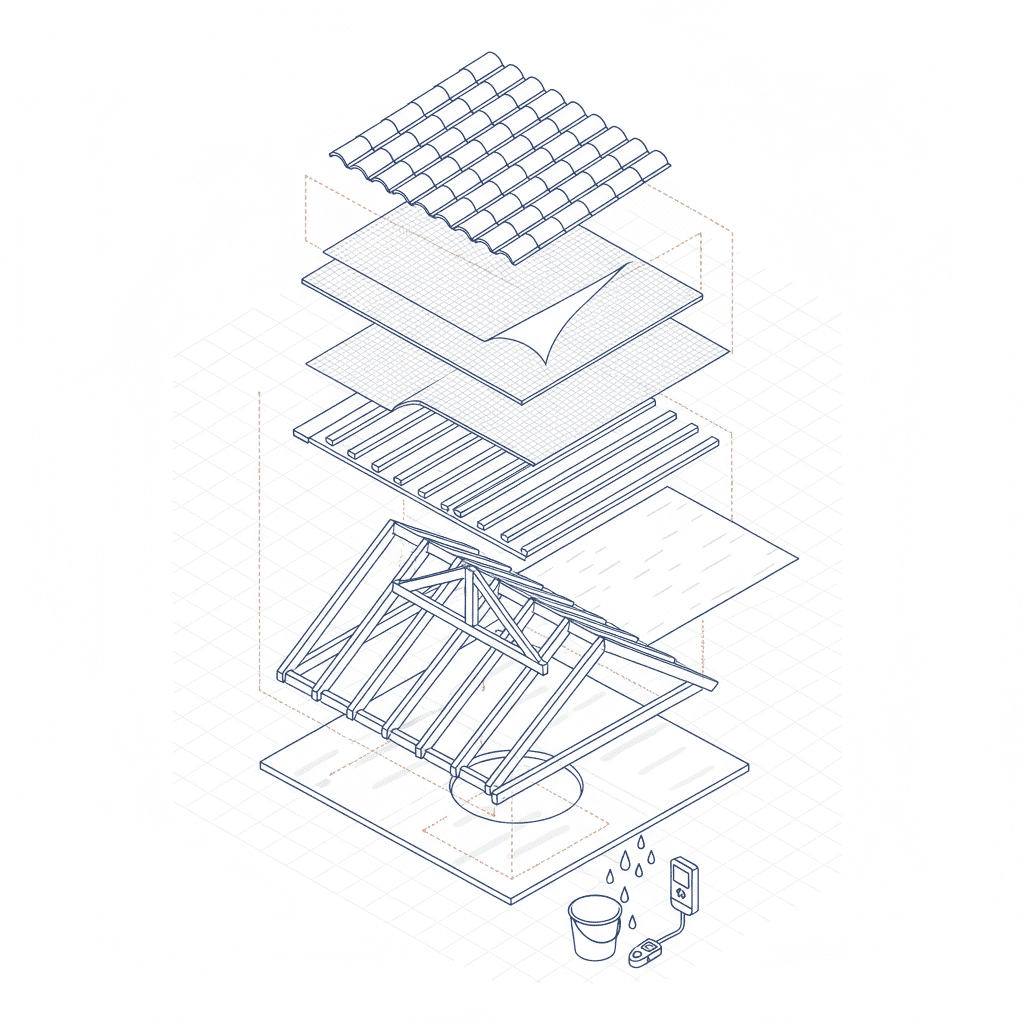
The attic or crawlspace is the critical link between the interior and exterior. This is where the path of water infiltration becomes clear. Our technicians inspect the underside of the roof decking for water stains, rot, or darkening. Water follows gravity, traveling along rafters and trusses before dripping onto the insulation and drywall below. Saturated, compressed, or moldy insulation is a key indicator of a persistent leak. By mapping the water’s path on these support constructions, we can narrow the search area on the roof’s exterior surface with high precision.
Exterior Roof Surface Analysis: Pinpointing Material and Top Covering Failures
With data from the interior and attic inspections, the exterior analysis is targeted and efficient. We are no longer searching the entire roof; we are examining a specific, high-probability zone for material failures. This involves a direct inspection of all components in the target area. We assess shingles for cracks or missing granules, examine flashing around penetrations like vents and chimneys, and check the integrity of all sealant. The goal is to find the exact point of failure—the compromised material that has failed its primary function of repelling water.
Common Failure Points in Roof Materials and Construction
Roof leaks are not random events. They are predictable outcomes resulting from specific material failures or construction defects. Understanding these common vulnerabilities is essential to both diagnosing a current problem and preventing future ones. A roof is a complex system of interconnected materials designed to work in concert; a failure in one component compromises the entire system.
Flashing and Sealant Degradation: The Primary Breach Point
Flashing is the metalwork that seals the transitions between the roof and other structures, such as a chimney, dormer wall, or vent pipe. It is the most critical and most common point of failure. Over time, exposure to temperature extremes and sunlight causes sealant to dry, crack, and pull away, creating a direct path for water. Incorrectly installed flashing, which relies on caulk as its primary seal instead of proper mechanical integration, is a guaranteed future failure. This is a frequent shortcut taken by low-cost contractors and a primary cause of chronic water intrusion.
Compromised Top Covering: Assessing Damage from Wind and Sunlight
The primary top covering—typically asphalt shingles—is the roof’s first line of defense. Its integrity can be compromised by several factors. Wind uplift can lift and break shingles, while hail can create impact fractures that expose the underlying mat. The most pervasive threat is sunlight. Over years, UV radiation degrades the asphalt, causing shingles to become brittle, crack, and lose their protective granules. This is a natural aging process, and a leak in one area may indicate systemic failure across the entire roof surface.
Ice Damming: The Impact of Snow and Extreme Temperatures on Roof Integrity
Ice damming is a specific failure mode caused by the interaction of snow cover, heat loss from the home, and freezing temperatures. Heat escaping through the attic melts the underside of the snowpack on the roof. This water flows down to the colder eaves and gutters, where it refreezes, forming a dam of ice. Additional meltwater pools behind this dam, backing up under the shingles and penetrating the roof deck. This bypasses the roof’s normal water-shedding design and is a direct result of inadequate insulation and ventilation, a failure of the roof’s role in managing temperature extremes.
Improper Construction: The Root Cause of Chronic Water Intrusion
The most frustrating leaks are those caused by poor workmanship. These are not material failures; they are human errors that create problems from day one. Common examples include incorrectly driven nails (‘nail pops’) that back out and create holes, an improper nailing pattern that fails to secure shingles against wind, or inadequate shingle overhang at the eaves. These errors violate building codes and manufacturer specifications, void warranties, and represent a fundamental breakdown in the construction process. They are the direct result of prioritizing speed and low cost over quality control and are the very chaos we have built our company to eliminate.
Validating the Leak Source: A Controlled Water Testing Methodology
A professional diagnosis does not rely on assumptions. Once a suspected entry point is identified, it must be validated. A controlled water test is the definitive method for confirming the exact source of a leak, ensuring that the subsequent repair addresses the true problem. This eliminates the risk of performing a repair that fails to solve the issue, a common and costly outcome in the roofing industry.
Preparing for a Controlled Test: Safety and Equipment Protocols
A water test requires strict safety protocols. This is not an advisable DIY task for a homeowner. It involves working at height, often on a wet surface, which significantly increases fall risk. Our process requires appropriate ladder safety, personal protective equipment (PPE) including harnesses, and a dedicated ground spotter for the technician on the roof. The only equipment required is a standard garden hose with an adjustable nozzle and a reliable communication method between the roof technician and an interior spotter.
Executing the Isolation Method: A Step-by-Step Guide for Precise Confirmation
The key to a successful water test is the isolation of variables. Flooding the entire roof with water is chaotic and counterproductive. Our method is systematic and precise.
- Start Low: Testing begins at the lowest point in the suspected leak area, such as a window or a section of siding below the roofline, and works upward. This prevents water from a higher point from contaminating the results of a lower test area.
- Isolate Components: Water is applied to one component at a time for several minutes. For example, we test the downhill side of chimney flashing first, then the sides, then the uphill ‘cricket’ section.
- Wait for a Signal: The technician on the roof soaks a single, isolated area while the interior spotter waits for a drip to appear. Once the drip starts, the test stops.
- Confirm the Source: The location where water was being applied when the drip began is the confirmed, validated source of the leak.
This methodical process provides an undeniable confirmation, transforming a hypothesis into a fact and ensuring the repair plan is 100% accurate.
The Financial Equation: When a DIY Search Requires Professional Intervention
We understand the impulse of a meticulous homeowner to diagnose a problem themselves. However, a roof leak involves significant variables—safety, structural, and financial—that demand a sober cost-benefit analysis. Attempting a complex diagnosis without proper expertise can introduce risks that far outweigh the potential savings.
Risk Assessment: Evaluating Structural, Safety, and Financial Variables
When considering a DIY diagnosis or repair, you must evaluate the following risks:
- Safety Risk: Falls from ladders or roofs are a leading cause of serious injury. This risk is not trivial.
- Structural Risk: Walking on a roof, especially one with a potential leak, can cause further damage to shingles or underlying structures if not done correctly. An unknown leak may have caused rot in the roof deck, creating a dangerous weak spot.
- Financial Risk: Many homeowners’ insurance policies may deny claims for damage caused by an improper, non-professional repair. Furthermore, performing work yourself can void existing warranties on roofing materials.
A professional contractor carries the liability and insurance to mitigate these risks on your behalf.
Defining Scope: Differentiating Minor Repairs from Systemic Failures of Protection
It is critical to determine if you are dealing with a simple, isolated repair or the first symptom of a systemic failure. Replacing a single blown-off shingle is a minor task. However, if that shingle is brittle and cracked, it likely signals that the entire roof is reaching the end of its effective service life. Performing a spot repair on a roof that is failing systemically is a poor allocation of resources. A professional assessment provides the data needed to make an informed decision: a tactical repair versus a strategic replacement to protect your long-term investment.
The Antidote to Chaos: A Predictable Roof Diagnostic Process
The roofing industry is plagued by chaos, vague communication, and financial surprises. We have built our entire process to be the antidote to that experience. We believe a roofing project should be as predictable and well-managed as any other professional service you procure. This begins with a transparent, data-driven diagnostic process.
Our Non-Negotiable Commitment: Transparent Diagnostics, No Surprises
Our findings are delivered to you in a comprehensive report, complete with photographic evidence and a detailed action plan. If a repair is recommended, our estimate is a line-item document, not a single, opaque number. You will see exactly what materials are required, the labor involved, and the cost for each. We do not operate on allowances or hidden fees. Any potential changes to the project scope are addressed through a formal change order, which you must approve before any additional work proceeds. Your budget is a fixed target, not a hopeful suggestion.
Your Dedicated Project Manager: A Single Point of Contact for Absolute Clarity
From the moment you engage with us, you are assigned a dedicated Project Manager. This is your single point of contact for all questions, updates, and scheduling. You will not be passed between departments or left wondering who to call. Your Project Manager is responsible for communication and is accountable for your project’s success. You receive regular, proactive updates on the status of your diagnostic or repair. This structure eliminates the communication failures and disorganization that define the typical contractor experience.
Why We Refuse to Be the Cheapest Quote (And Why That Protects Your Building)
We will not be your lowest bid. If your selection criteria is based solely on finding the cheapest price, we are not the right company for you. We state this with confidence because our process is designed to deliver a specific outcome: certainty. That certainty is achieved through superior materials, highly trained and certified installers, and a project management system that commands a premium. The lowest bid is the primary cause of the improper construction, sealant shortcuts, and chronic leaks detailed in this report. Choosing the cheapest quote is choosing to embrace chaos. Choosing RocStout is an investment in predictability, long-term value, and the protection of your most significant asset.