Pipe Boot and Flashing Materials: Why Rubber Fails and Silicone Lasts
A pipe boot, also known as pipe flashing, is an engineered component of a roofing system designed to form a watertight seal around roof penetrations, such as plumbing vents. Its sole function is to maintain the integrity of the building’s top covering, which provides essential protection against rain, snow, sunlight, and extremes of temperature. The selection of a pipe boot’s material is a critical decision that directly impacts the long-term performance and predictability of the entire roof assembly. Failure at this single point guarantees failure of the system.
The Role of Pipe Boots in Total Roof System Integrity
A roof is not a monolithic surface; it is a system of integrated components. The system’s integrity is defined by its weakest point. In nearly all residential roofing constructions, the points of highest risk are penetrations where elements like pipes, vents, or chimneys pass through the roof deck. These areas disrupt the continuous water-shedding surface and require specialized flashing to prevent water intrusion.
Defining a Critical Failure Point: Roof Penetrations
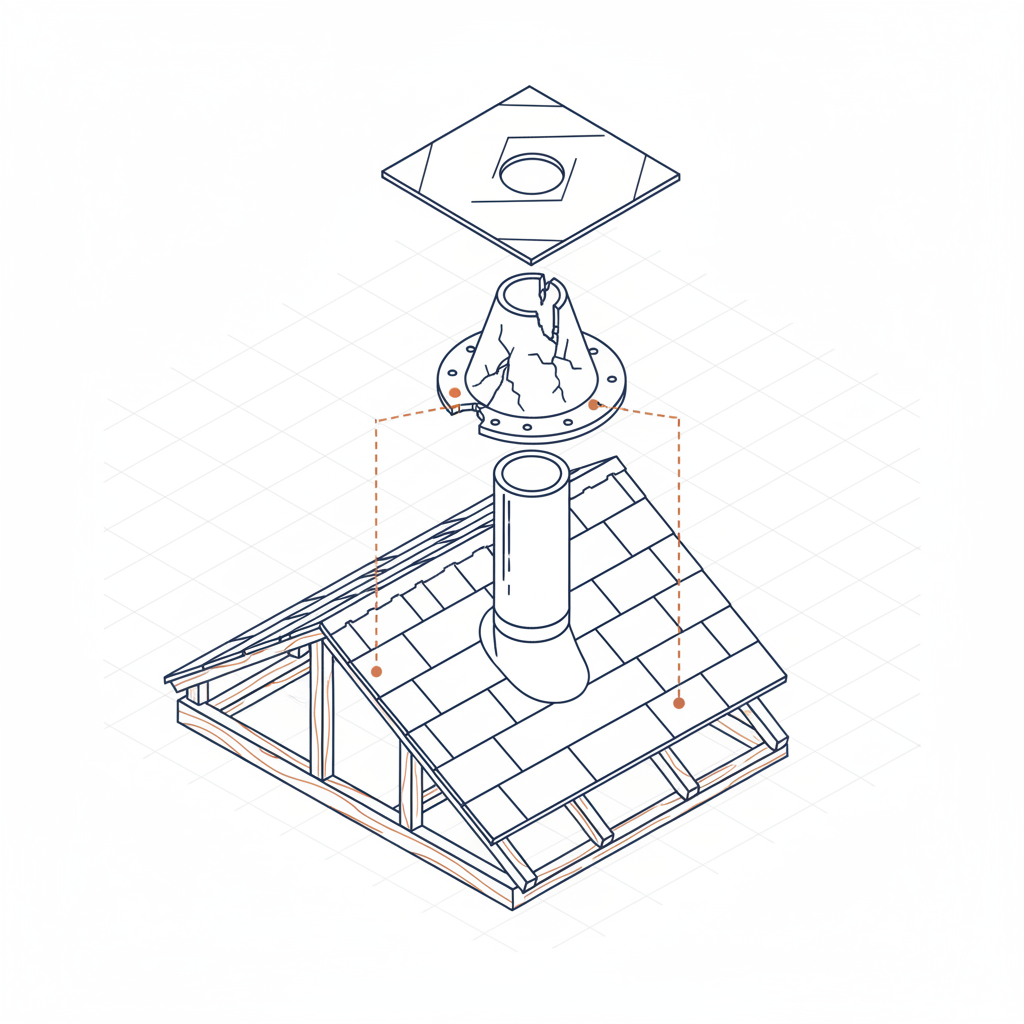
A roof penetration is any object that passes through the plane of the roof deck. The most common are plumbing vent pipes. To seal this necessary breach in the building envelope, a pipe boot is installed. This component consists of a flange, which integrates with the shingles, and a flexible collar or sleeve that seals around the pipe itself. A failure of this watertight seal exposes the roof deck, underlayment, and attic space to direct water entry, compromising the building’s primary defense against weather.
How Material Failure Undermines Protection Against Rain and Snow
The constant exposure to environmental stress is the primary cause of pipe boot failure. When the material of the boot’s collar degrades, it cracks, splits, or loses its elasticity. This degradation creates a direct channel for water intrusion during rain or snow melt. A compromised pipe boot nullifies the function of the surrounding shingles and underlayment, allowing water to bypass these protective layers and saturate the wooden roof deck. This leads to wood rot, mold growth, and costly structural repairs—a chaotic and entirely preventable outcome.
Material Analysis: Performance Under Environmental Stress
The durability of a pipe boot is a direct function of its material composition and its ability to resist environmental stressors, primarily UV radiation from sunlight and cyclical extremes of temperature. Different materials exhibit vastly different performance characteristics, and the choice reflects a contractor’s fundamental approach to risk management.
The following table provides a direct comparison of common pipe boot materials. This is not a list of equivalent options; it is a hierarchy of performance. For a project where the goal is eliminating future problems, only materials in the highest performance tiers are acceptable.
| Material | Primary Failure Mode | Expected Lifespan | Performance Tier |
|---|---|---|---|
| Plastic & Neoprene | UV Degradation (Cracking) | 3-7 Years | Low (Unacceptable Risk) |
| EPDM Rubber | Ozone Degradation, Loss of Elasticity | 10-15 Years | Medium |
| Silicone | Extremely Low; Mechanical Damage | 30+ Years (Lifetime of Shingles) | High (System Standard) |
| Lead | Puncture, Improper Installation | 50+ Years | Maximum (Specialty Application) |
Plastic & Neoprene Boots: The Standard for Low-Bid Contracts
The most common pipe boots used by roofing contractors are made with a PVC plastic flange and a neoprene collar. This choice is based on a single factor: low upfront cost. Neoprene is an organic rubber that is highly susceptible to UV degradation. Sunlight’s radiation breaks down its polymer chains, causing the material to become brittle and develop cracks. This is not a possibility; it is a chemical certainty. Premature failure is designed into the product. A contractor who installs this component is prioritizing a lower initial bid over the long-term integrity of your home. This approach introduces a predictable point of failure, creating future chaos for the homeowner.
Silicone Pipe Boots: Superior Resilience to Sunlight & Temperature
Silicone possesses an inorganic silicon-oxygen backbone, not the carbon-based structure of organic rubbers like neoprene. This molecular structure is inherently resistant to UV radiation and thermal stability issues. Silicone does not harden, crack, or become brittle when exposed to decades of direct sunlight and temperature swings. It maintains its flexibility, ensuring a continuous, watertight seal for the entire service life of the roofing system. Its long-term performance makes it the only logical choice for a predictable, stress-free outcome.
Lead Pipe Boots: Maximum Longevity and Malleability
For centuries, lead was the primary material for roof flashing. It offers unparalleled longevity and is highly malleable, allowing a skilled installer to form a perfect, seamless flashing on complex or historic constructions. While its performance is exceptional, lead requires specialized installation techniques and carries a significantly higher material and labor cost. It remains the gold standard for specific applications, particularly on slate or tile roofs, but silicone offers comparable longevity for most asphalt shingle systems at a more accessible price point.
EPDM Rubber: A Mid-Range Performance Assessment
EPDM (ethylene propylene diene monomer) is a synthetic rubber with better resistance to ozone and weathering than neoprene. It represents a step up from the lowest-cost option. However, it does not possess the same level of UV and thermal stability as silicone. Over 10-15 years, EPDM will still lose elasticity and can shrink, potentially compromising the seal around the pipe. While it may be marketed as a quality material, it does not meet the standard for a zero-failure-point system. It is a compromise, and our process does not accommodate compromise.
Installation Protocol: Ensuring a Predictable, Watertight Construction
The highest quality material will fail if the installation method is flawed. A predictable outcome requires a systematic installation protocol that is followed without deviation. The enemy is workmanship variance—the chaotic results of a contractor who lacks a standardized process.
Common Installation Errors That Guarantee System Chaos
Most leaks at pipe boots are not sudden, catastrophic events. They are the result of persistent installation errors that create slow, hidden water intrusion. These errors include improper fastening, where nails are driven through the flange in water-bearing areas; sealant failure, from using low-grade caulking instead of specified high-performance sealants; and incorrect shingle integration, where the top covering is not layered correctly to divert water over and around the flashing. These are not accidents; they are consequences of a lack of process and quality control.
A Systematic Approach for Flawless Pipe Boot Integration
Our methodology treats every roof penetration as a critical system that must be assembled according to precise specifications. This is the only way to guarantee a watertight construction. The process is documented and executed without variance.
A section of ice and water shield is installed around the pipe penetration, creating a secondary waterproof barrier directly on the roof deck.
The pipe boot is placed over the pipe. Fasteners are installed only on the upper portion of the flange, outside the primary water channel, per manufacturer specifications.
Shingles on the downslope side are installed over the flange. Shingles on the upslope side are installed under the flange. This uses gravity to ensure water is shed over the entire assembly.
A high-performance sealant is applied to the collar-pipe interface. The entire assembly is inspected to verify flawless integration and complete water diversion.
The RocStout Protocol: Eliminating Chaos in Roof Components
Our approach is engineered to deliver a predictable, stress-free experience for meticulous homeowners. We achieve this by eliminating variables and refusing to compromise on materials or process. If your primary goal is securing the lowest possible price, we are not the right partner for your project. Our process is for clients who understand that the true cost of a roof includes the risk of future failures and the chaos they cause.
Why We Mandate High-Performance Materials as a Non-Negotiable Standard
We mandate the use of high-performance silicone pipe boots on every asphalt shingle roof we install. This is not an upgrade or an option; it is a component of our standard system. We have identified low-grade pipe boots as a primary source of premature roof failure and have engineered that risk out of our process. By making material specification a non-negotiable standard, we protect your investment and guarantee the long-term integrity of our work. This commitment to quality assurance is the foundation of a predictable roofing project.
Your Project Plan: A Documented Process for Every Roof Penetration
You will never be in the dark about how your home is being protected. Your detailed project plan will specify the exact materials and installation methodology for every component, including each roof penetration. You will have a dedicated project manager, receive frequent updates, and can be confident that our quality inspection process verifies that every step has been executed to specification. There are no surprises, no shortcuts, and no chaos. There is only the systematic execution of a proven process for a guaranteed outcome.