A roof damage assessment protocol is a systematic forensic process used to differentiate between acute, event-driven damage from hail and chronic degradation caused by long-term environmental exposure. The primary function of a roof, the top covering of a building, is to provide absolute protection against rain, snow, sunlight, temperature extremes, and wind. Any condition that compromises this protective function constitutes damage. Misinterpreting gradual wear as sudden damage, or vice versa, introduces financial risk and operational chaos into the management of your property. This protocol provides a clear, data-driven framework for making an accurate diagnosis, eliminating the ambiguity common in the roofing industry.
The Diagnostic Framework: Differentiating Sudden Impact vs. Gradual Aging
An accurate assessment begins with understanding the fundamental differences between two distinct phenomena: the sudden, kinetic energy transfer of a hail impact versus the slow, predictable decay from environmental exposure. Hail damage is a localized, random event. Normal wear is a uniform, systemic process. Confusing the two is the most common point of failure in a roof assessment, leading to denied insurance claims or unnecessary replacements. We operate on objective criteria, not guesswork.
Impact Signatures: Identifying Hail Bruising and Granule Impingement
Hailstones cause damage through focused, high-velocity impact. The resulting signatures are distinct and measurable. Hail bruising occurs when the impact displaces the protective mineral granules and physically damages the underlying asphalt and fiberglass mat. This is not a cosmetic issue; it is a fracture of the shingle’s primary water-shedding layer. Look for dark, circular, or irregular spots where the granules have been forcibly pressed into the asphalt. On a microscopic level, this impact can cause a mat fracture, breaking the structural fiberglass core of the shingle. Collateral damage on softer materials, such as aluminum vents or gutters, provides corroborating evidence of a significant hail event. These impacts are random in pattern, reflecting the chaotic nature of a hailstorm.
Aging Indicators: Documenting Granule Loss and UV Degradation from Sunlight
Normal wear and tear is the result of prolonged exposure to the elements, primarily sunlight. Over years, intense UV radiation breaks down the bitumen (asphalt) in shingles, causing them to become brittle. This process leads to gradual, uniform granule loss across large sections of the roof, particularly on sun-facing slopes. Unlike the focused granule loss from a hail impact, age-related loss appears as a thinning of the protective layer, sometimes revealing the underlying asphalt. Thermal cracking, which looks like small fissures across the shingle surface, is another indicator of age, resulting from the constant expansion and contraction of roof materials through temperature cycles. These are predictable signs of a roof approaching the end of its service life.
The following table provides a clear comparison between these two damage types:
| Attribute | Hail Damage (Sudden Impact) | Normal Wear (Gradual Aging) |
|---|---|---|
| Pattern | Random, scattered, inconsistent placement. | Uniform, widespread, often more pronounced on sun-facing slopes. |
| Granule Loss | Granules are impacted *into* the asphalt (bruising). A clear impact point is visible. | Granules are weathered away, exposing the asphalt below. No impact point. |
| Asphalt Condition | The underlying mat may be fractured or bruised. Feels soft or spongy to the touch. | Asphalt is hard, dry, and brittle. May exhibit thermal cracking. |
| Collateral Signs | Dents and creases on soft metals (vents, flashing, gutters). | Fading, discoloration, and general material fatigue. |
Material Brittleness Analysis: How Age and Temperature Extremes Exacerbate Impact Damage
Shingle age is a critical variable in damage assessment. An older, more brittle shingle has lost much of its flexibility due to years of thermal shock and material fatigue. What might be a minor impact on a new, pliable shingle can cause a catastrophic fracture on a 15-year-old shingle. The structural integrity of an aging roof is already compromised. Therefore, a hailstorm does not need to be severe to cause functional damage to an older roof system. This is a crucial distinction. The insurance carrier is responsible for restoring the roof to its pre-storm condition; if a moderate storm destroys an old roof, it is still an insurable event because the storm was the direct cause of the failure.
A Systematic, Component-by-Component Roof Analysis
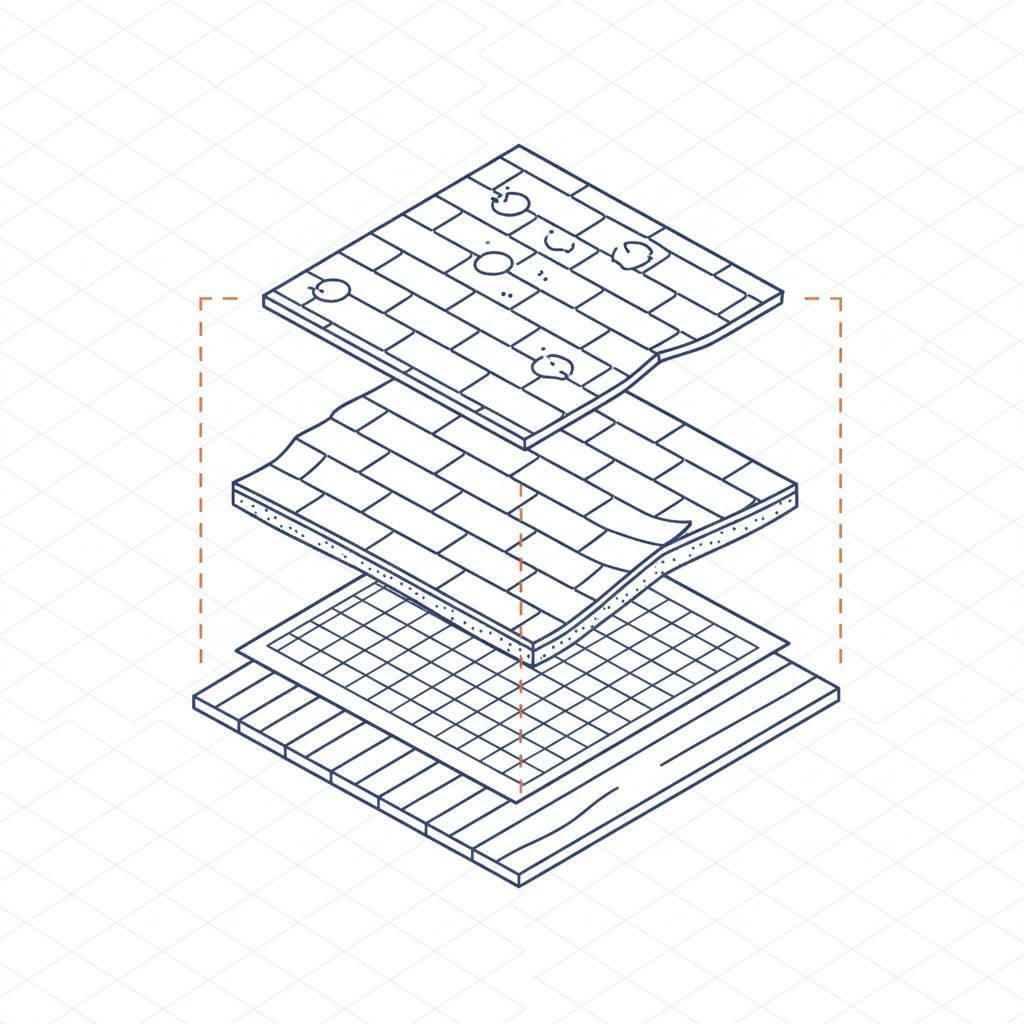
A roof is not a single surface; it is an integrated system of materials and construction designed for complete building protection. A proper analysis requires a component-by-component inspection. Assessing only the most visible shingles is an incomplete and inadequate methodology. The entire system—shingles, metals, underlayment, and decking—must be examined to understand the full scope of damage and ensure uninterrupted rain protection.
Shingle Mat Integrity: Differentiating Hail Punctures from Age-Related Blistering
The core of an asphalt shingle is its fiberglass mat, which provides structural stability. A direct hail impact can puncture or fracture this mat, creating a direct path for water intrusion. This is fundamentally different from age-related blistering. Roof blisters are caused by trapped moisture or gas within the shingle itself, which expands in the heat and creates a bubble on the surface. A blister is typically hollow, and if popped, will reveal an intact mat beneath. A hail impact mark, when pressed, feels soft or spongy because the mat underneath is broken. Mistaking blisters for hail damage is a common error made by untrained inspectors.
Soft Metal Assessment: Quantifying Damage to Vents, Flashing, and Gutters
Soft metal components like aluminum flashing and roof vents are the control group in a hail damage assessment. These materials dent easily and serve as undeniable proof of a hail event with projectiles of significant size and velocity. The quantity, size, and depth of dents on these surfaces provide objective data about the severity of the storm. Clean, distinct dents and creases from hail impact are easy to distinguish from installation damage or other mechanical marks. A roof with significant shingle damage but pristine soft metals warrants a more critical analysis.
Underlayment and Decking: Assessing for Secondary Threats Post-Impact
The shingles are the primary barrier, but the underlayment and roof decking provide critical secondary protection and structural support. A severe hail impact that fractures a shingle exposes the underlayment to direct UV and moisture. Over time, this exposure degrades the moisture barrier, creating a pathway for water to reach the wooden roof decking. A thorough inspection includes checking the attic space for signs of moisture intrusion post-storm, which can confirm that the shingle damage is functional and has compromised the system’s ability to handle rain or snow load.
Quantifying Damage: The Financial Implications for Insurance vs. Maintenance
The purpose of a diagnosis is to determine a course of action. Is this an insurable loss requiring a claim, or is it a maintenance issue requiring a scheduled replacement? The answer dictates the financial path forward. An insurance claim is appropriate for an acute event—an “act of God”—that suddenly reduces the functional lifespan of your roof. Maintenance addresses the predictable, gradual decline of the asset over time.
Insurance Claim Thresholds: Defining “Functional Damage” vs. Cosmetic Issues
Insurance policies are designed to cover “functional damage.” This term refers to damage that diminishes the roof’s ability to shed water and protect the building for its expected lifespan. A hail impact that fractures the shingle mat is functional damage. A scuff mark or a minor dent on a vent that does not impede its operation may be deemed cosmetic damage and is often not covered. The distinction is critical. A public adjuster or an experienced contractor can help interpret your specific policy, but the burden of proof rests on demonstrating that the storm caused a material loss of function, not just a change in appearance. A denied claim can result from a failure to meet this threshold.
Calculating Wear: A Formula for Estimating Remaining Roof Life
For a roof suffering from normal wear, the key metric is its remaining service life. A simple formula provides a baseline for asset management: (Manufacturer’s Expected Lifespan) – (Current Age of Roof) = Remaining Service Life. For example, a 30-year architectural shingle that is 18 years old has approximately 12 years of service life remaining. This calculation helps a homeowner budget for a future replacement and avoids the surprise of a sudden, catastrophic failure. This is proactive asset management, not reactive crisis control.
Documentation Standards: Building an Undeniable Case File for Your Claim
If the evidence points to an insurable loss, the next step is to build an undeniable case file. Vague assertions will be rejected. Meticulous documentation is non-negotiable. This evidence log must include high-resolution, dated photo documentation of all damage points, including collateral damage to gutters, windows, and siding. A detailed inspection report from a qualified contractor should map the damage and provide a clear contractor estimate for repairs or replacement. This package, submitted with your claim, replaces ambiguity with data, significantly streamlining the approval process and defending against a wrongful claim denial.
The Pitfall of Misdiagnosis: Financial and Structural Consequences
An incorrect assessment is not a minor error; it is a catalyst for chaos. It can trigger a cascade of negative financial and structural consequences, turning a manageable situation into a significant liability. The roofing industry is rife with incompetence; a flawed assessment from a “storm chaser” is the first step toward a disorganized, stressful, and expensive project.
Unnecessary Claims: The Risk of Premium Hikes and Policy Cancellation
Filing a claim for what is actually normal wear and tear is a serious financial misstep. Even if the claim is denied, it is recorded in your claim history. Multiple claims, even for zero payout, can flag you as a high-risk policyholder, leading to substantially higher insurance premiums or even a policy non-renewal. Your insurance is for catastrophic, sudden loss, not for funding a maintenance cycle. Misusing it carries a high financial risk.
Delayed Replacement: When Normal Wear Becomes a Critical System Failure
Conversely, misdiagnosing functional hail damage as simple wear can be even more destructive. Believing you have a few more years of life in a compromised roof system is a dangerous gamble. A fractured shingle is an open door for water damage. A slow, undetected leak can lead to widespread rot, structural decay, and toxic mold growth inside your home. What could have been a fully insured roof replacement becomes a multi-thousand-dollar remediation project paid entirely out of pocket. Deferring necessary maintenance after an impact event is not saving money; it is inviting a catastrophic failure.
Contractor Incompetence: The High Cost of a Flawed, Chaotic Assessment
The most pervasive threat is the unqualified contractor. These individuals, often arriving after a storm, lack the technical expertise to perform a proper forensic analysis. Their flawed estimates lead to supplement battles with insurance, hidden costs, and surprise charges. Their poor communication and lack of project management create the exact chaotic experience organized homeowners despise. Choosing a contractor based on the lowest price or the quickest availability is a direct invitation for this type of disorder. A flawed assessment is the first symptom of a flawed company.
The RocStout Roofing and Construction Protocol: A Predictable Path to an Accurate Roof Assessment
We built our company as the antidote to industry chaos. Our entire methodology is designed for the meticulous homeowner who values clarity, predictability, and precision. We believe a roofing project should be a managed, transparent process, not a stressful ordeal. If your primary goal is finding the absolute lowest bid, we are not the right partner for you. Our process is an investment in certainty.
Our Multi-Point Digital Inspection and Reporting System
We replace guesswork with data. Our protocol utilizes a multi-point digital inspection, often incorporating drone imaging for a comprehensive overview and detailed photography for microscopic analysis. We document every aspect of your roof system, from shingles and vents to flashing and underlayment. The output is not a verbal opinion; it is an objective, data-driven digital report that clearly outlines the condition of your asset with supporting visual evidence. This is the foundation for an intelligent decision.
A technician conducts a component-by-component analysis, capturing high-resolution imagery and data points across the entire roof system.
We analyze the collected evidence against established criteria for hail damage vs. wear, compiling the findings into a comprehensive digital report.
We review the report with you, explaining the findings and providing a clear, unambiguous recommendation: either a maintenance plan or an insurance claim strategy.
A Clear Deliverable: Distinguishing Between an Insurable Loss and a Maintenance Plan
Our final deliverable is clarity. There is no ambiguity. Based on the data, we provide a clear recommendation. If you have a valid insurable loss, we provide the documentation and strategic guidance to file a successful claim. If your roof is simply aging, we provide a detailed maintenance plan and a transparent estimate for a future replacement, allowing you to budget and plan effectively. Our consultative approach empowers you, the homeowner, to make the correct decision for your property without sales pressure.
Why We Are Not the Cheapest Bid (And How That Protects You from Chaos)
A commitment to a systematic, data-driven process requires significant investment in training, technology, and project management. This is why we are not the cheapest option. The low-cost bid is a bid on chaos. It cuts corners on inspection, uses inferior materials, and neglects communication. Our pricing is a direct reflection of our value proposition: guaranteed quality, transparent communication, and a predictable, stress-free experience. By choosing RocStout, you are not just buying a roof; you are buying peace of mind and making a sound investment in the long-term protection of your home.