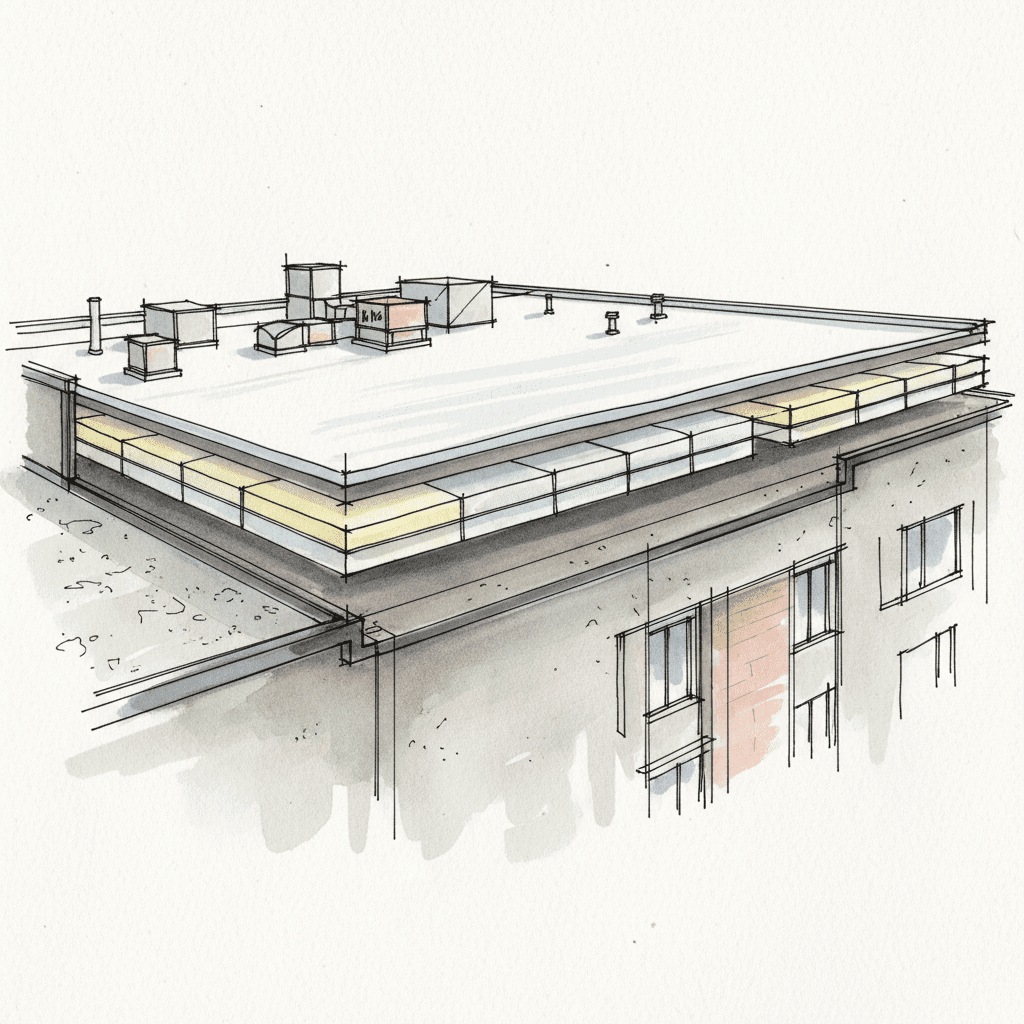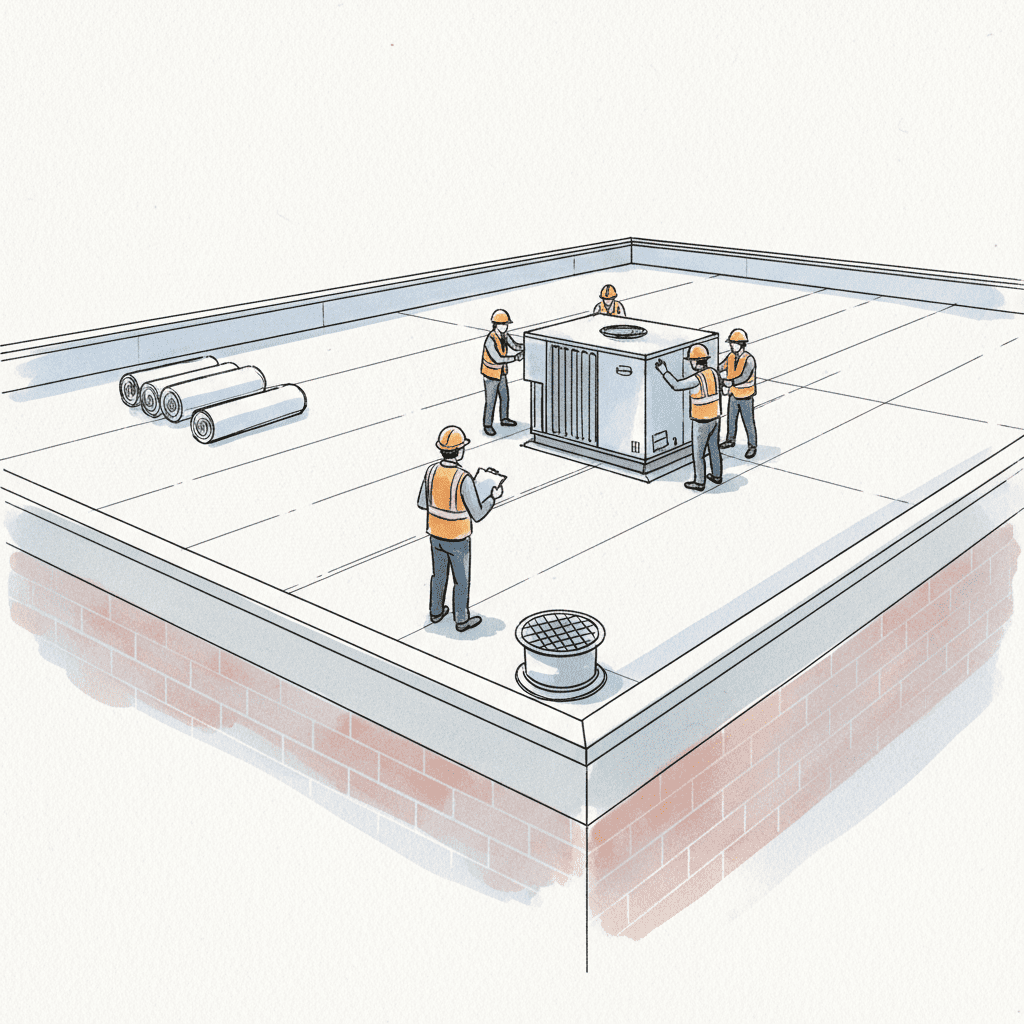
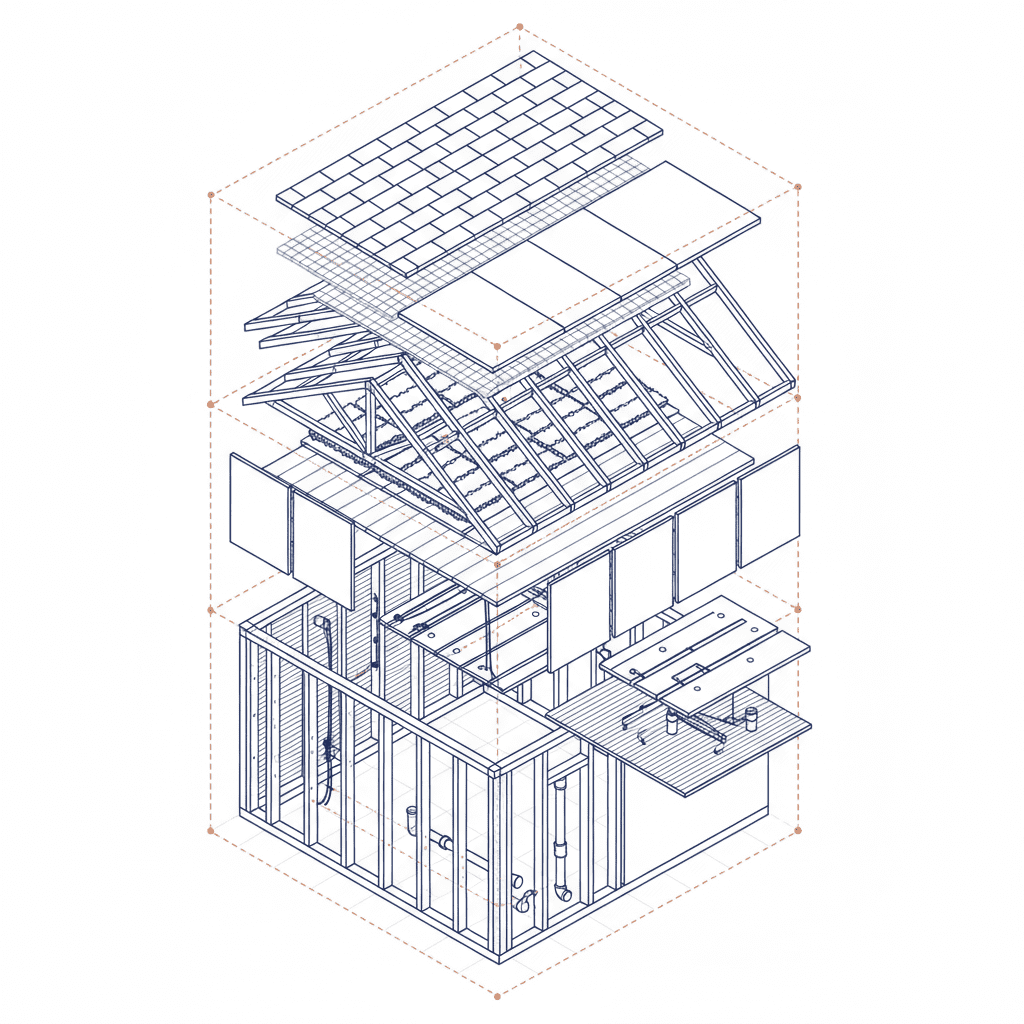
A code upgrade in roof replacement is a mandatory, non-optional modification required to bring an existing structure into compliance with current building ordinances enforced by a local municipality. These requirements are triggered when a significant portion of the roof, the top covering of a building designed for protection, is replaced. While your standard insurance policy covers replacing what was damaged, it often excludes the significant cost of these legally mandated upgrades, creating a critical and unexpected financial liability for the unprepared homeowner.
This is a frequent source of chaos in the roofing industry. Vague estimates and incomplete insurance scopes ignore these costs, leading to surprise charges and project delays. Our methodology eliminates this chaos. We operate on a foundation of absolute transparency and meticulous planning. This process is not for everyone. If your primary driver is the lowest possible price, we are not the right fit. Our clients choose us because they require a predictable, orderly process that protects their investment and eliminates financial uncertainty from start to finish.
Decoding ‘Ordinance or Law’: Your Policy’s Mandate for Code Compliance
Ordinance or Law coverage is a specific insurance endorsement designed to cover the increased costs associated with bringing your home up to current building codes after a covered loss. A roof is the primary system providing protection against rain, snow, sunlight, extremes of temperature, and wind. As building science evolves, the codes governing this system become stricter to enhance safety and durability. When your old roof is removed, you are legally required to build the new one to the new, higher standard. This endorsement is the financial mechanism to address that gap.
Defining the Three Core Coverage Areas: A, B, and C
This endorsement typically has three distinct parts. Understanding each is critical to grasping your full financial picture. The separation ensures clarity on what is covered, from the loss in value of undamaged parts to the new construction costs.
| Coverage Part | Function | Roofing Example |
|---|---|---|
| Coverage A: Undamaged Portion | Covers the value of the undamaged part of the building that must be demolished to comply with a local ordinance. | A local rule requires a full roof replacement if over 50% is damaged. Coverage A pays for the value of the remaining, undamaged 49% that must now be torn off. |
| Coverage B: Demolition Cost | Pays for the direct cost to demolish and haul away the undamaged portion of the structure identified in Coverage A. | This covers the labor and disposal fees specifically for tearing off the undamaged section of the roof. |
| Coverage C: Increased Cost of Construction | Pays the additional costs required to repair or rebuild the structure to meet current building codes. This is the most critical part for most roof claims. | The cost to install new, thicker plywood decking, add an ice and water shield, or use a specific nailing pattern that was not required when the original roof was built. |
Why Standard Policies Fall Short Without This Specific Endorsement
A standard homeowner’s insurance policy is designed to restore your property to its pre-loss condition. It pays to replace damaged materials with materials of like, kind, and quality. It does not pay for improvements or upgrades. A code requirement is, by definition, an upgrade. Without the Ordinance or Law endorsement, your policy contains a coverage gap. The insurer will pay to replace your old shingles with new shingles, but they will explicitly deny payment for the new decking, ventilation, or water shields mandated by the city inspector. This leaves you, the homeowner, responsible for footing the entire bill for these non-optional, legally required upgrades. It is a significant and jarring out-of-pocket expense that methodical planning can prevent.
Critical Code Upgrades Triggered by Roof Replacement
When a building permit is pulled for a roof replacement, the project is subjected to the current version of the International Residential Code (IRC) as adopted by your municipality. These codes are not suggestions; they are legal mandates. The upgrades directly enhance your roof’s core functions of protection and structural stability.
Mandates for Wind Protection: Securing Your Roof’s Primary Defense
Modern codes enforce strict requirements to improve a roof’s defense against wind. High-wind zones have specific mandates for uplift resistance. This is achieved by specifying the type and strength of the roof sheathing and, most commonly, a precise nailing pattern. Inspectors will check that the nails are the correct type, length, and are spaced correctly across the entire roof field to prevent panels from detaching during a storm. This is a direct enhancement to the roof’s function of providing protection against wind.
Upgrades for Rain & Snow Protection: Fortifying Against Water Intrusion
Water intrusion is the most persistent threat to a home’s structure. Current codes mandate superior protection against rain and snow. This often requires the installation of a self-adhering ice and water shield along the eaves, in valleys, and around all roof penetrations. This material acts as a secondary, waterproof barrier beneath the shingles. Furthermore, codes now dictate specific flashing requirements and the mandatory installation of a metal drip edge to control the flow of water away from the fascia. These components work as a system to ensure the roof performs its primary duty of shedding water effectively.
Temperature & Sunlight Mandates: Enhancing Your Home’s Energy Envelope
A roof’s role in managing extremes of temperature is now governed by energy codes. The most common code upgrade in this category is attic ventilation. Proper roof ventilation requires a balanced system of intake and exhaust vents to regulate temperature and moisture in the attic. This prevents heat buildup in the summer, which can degrade shingles, and moisture buildup in the winter, which can cause mold and rot. The goal is to separate the building’s conditioned interior from the external extremes of temperature, and proper ventilation is the mechanism to achieve this.
Structural Integrity Upgrades: Ensuring Proper Roof Decking & Support
The structural support system is the foundation of your roof. Older homes were often built with spaced plank decking or thin plywood sheathing that does not meet modern structural standards. A complete roof replacement often triggers a code requirement to re-deck the entire roof with solid, thicker plywood or OSB (Oriented Strand Board). This provides a solid, contiguous surface for attaching underlayment and shingles, increases the roof’s load-bearing capacity, and ensures the entire system is properly supported by the rafters and walls below.
The Financial Framework: Calculating Coverage vs. Out-of-Pocket Costs
Navigating the financial side of a code-upgrade claim requires precision. The process involves your contractor, your insurance adjuster, and the local code official. The final settlement is determined by the policy’s language regarding Replacement Cost Value (RCV), Actual Cash Value (ACV), and depreciation.
How Insurers Document and Approve Code-Required Work
An insurer will not pay for a code upgrade based solely on a contractor’s recommendation. They require objective proof. The process is methodical. First, the specific code must be identified and cited directly from the local municipality’s adopted building code. Second, a letter or report from the local building inspector or code official is often required to confirm that this code applies to your specific project. This documentation is submitted to the insurance adjuster along with a detailed line-item estimate showing the exact cost of the required materials and labor. This forms the basis of a supplemental claim for the increased cost of construction.
Analyzing Recoverable vs. Non-Recoverable Depreciation for Upgrades
When your claim is approved, the insurer calculates the full Replacement Cost Value (RCV) of the upgrade. They will initially pay the Actual Cash Value (ACV), which is the RCV minus depreciation. This withheld amount is called the holdback or recoverable depreciation. To recover this holdback, you must first have the work completed and paid for. You then submit the final invoice to the insurer as proof. For code upgrades, the depreciation is almost always fully recoverable, provided you have adequate Coverage C limits. Unlike a voluntary ‘betterment’ like upgrading from asphalt to slate, a code upgrade is a non-optional, required expense, and is therefore treated as part of the total replacement cost.
Identifying Common Coverage Gaps and Policy Limits
The most common coverage gap is the absence of an Ordinance or Law endorsement altogether. However, even with the endorsement, you must be aware of its limits. Coverage C is often capped at a percentage of your home’s total insured value, typically 10% or 25%. For a major project, the cost of re-decking a large roof and other upgrades can potentially exceed this limit. Any amount over the policy limit becomes an out-of-pocket expense. Understanding this limit before the project begins is a non-negotiable part of responsible project management.
Executing the Project: A Methodical Process to Prevent Chaos
Success is the result of a deliberate, step-by-step process. The typical industry approach of starting work with an incomplete scope is a direct path to the chaos of change orders, surprise costs, and conflict with your insurer. Our protocol is the antithesis of this. It is designed for clarity and predictability.
Our first action is a comprehensive roof inspection paired with a code analysis for your specific municipality. We identify every potential code-required upgrade before any work begins or any initial scope is finalized. This is our mandatory due diligence.
We build a complete, line-item estimate, often using Xactimate software, that includes all code requirements with supporting documentation. We present this to your insurer to negotiate and agree upon the full, correct scope of work before the project starts. Full transparency is the goal.
With an approved scope, we execute the work. Every phase of the project, especially the code upgrades, is documented with high-resolution photos. This serves as proof for your insurer, supports warranty compliance, and provides you with a permanent record of the quality control process.
Our Protocol for Code Upgrade Projects: The Antidote to Industry Chaos
Our entire business is built around a single premise: a major construction project on your home does not have to be a chaotic, stressful, and financially unpredictable event. We have engineered a process that delivers a predictable outcome for meticulous homeowners who value order and clarity.
Our Position: Absolute Clarity on All Code-Related Costs is Non-Negotiable
We do not begin work until there is total financial clarity. This means identifying every required code upgrade, quantifying the exact cost, and securing approval from your insurance carrier upfront. We provide a fully itemized estimate that shows you exactly what you are paying for. There are no surprise charges. There are no vague allowances. Cost certainty is a non-negotiable component of our service.
Why Vague Estimates Are a Red Flag We Actively Reject
A low-bid contractor who ignores code upgrades is not saving you money; they are exposing you to risk. Their vague estimate is a trap, designed to get a signature before revealing the inevitable and expensive change orders for ‘unforeseen costs’ that were, in fact, entirely foreseeable. This is the business model we actively reject. If a prospect’s primary concern is securing the lowest initial number on a piece of paper, we respectfully withdraw. We are a poor fit for bargain hunters because our process is designed to deliver a specific result, not a specific price point.
Your Dedicated Project Manager: A Single Point of Contact for a Predictable Outcome
Disorganization stems from poor communication. To prevent this, we assign a dedicated Project Manager to your project. This individual is your single point of contact from start to finish. They are responsible for managing the schedule, coordinating with the crew and inspectors, and providing you with regular, substantive project updates. This organized process and communication protocol eliminates the anxiety of the unknown and ensures a stress-free experience. It is the only sane way to manage a complex roofing project.