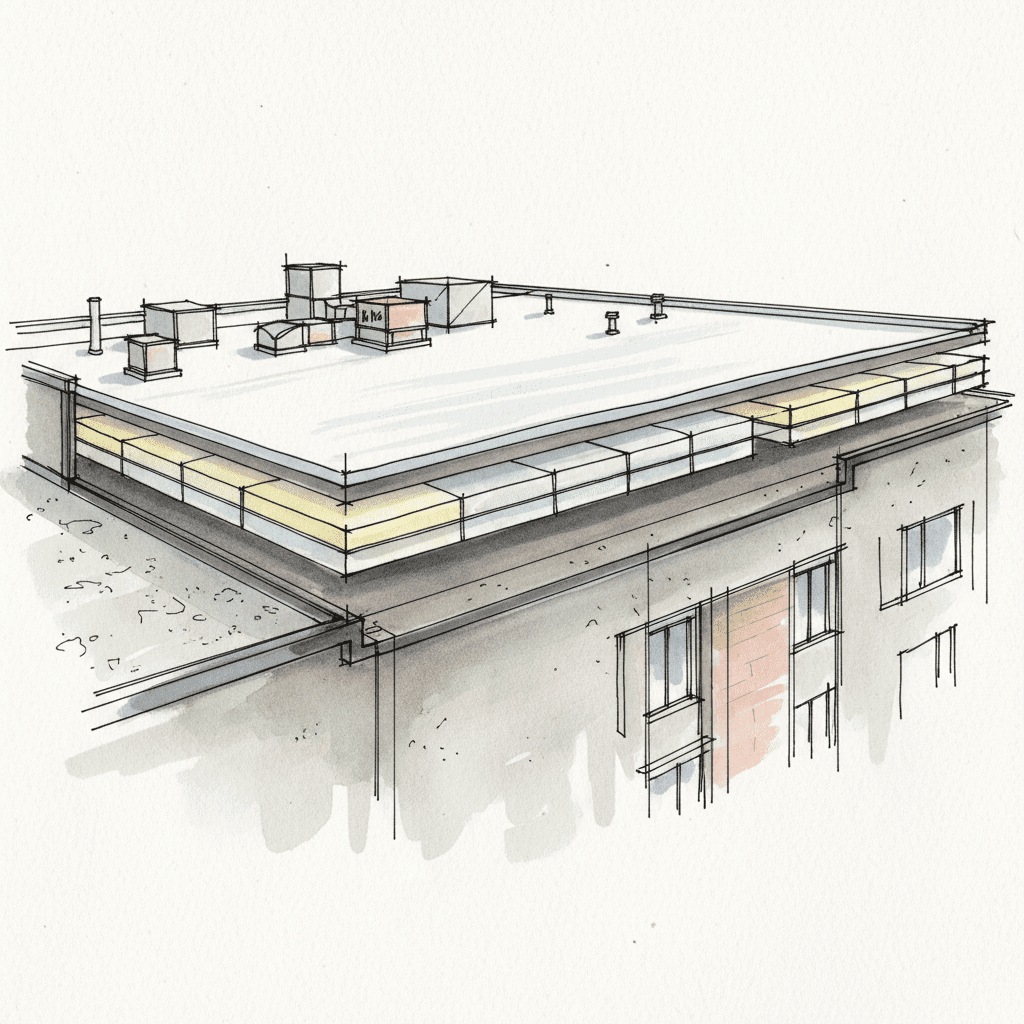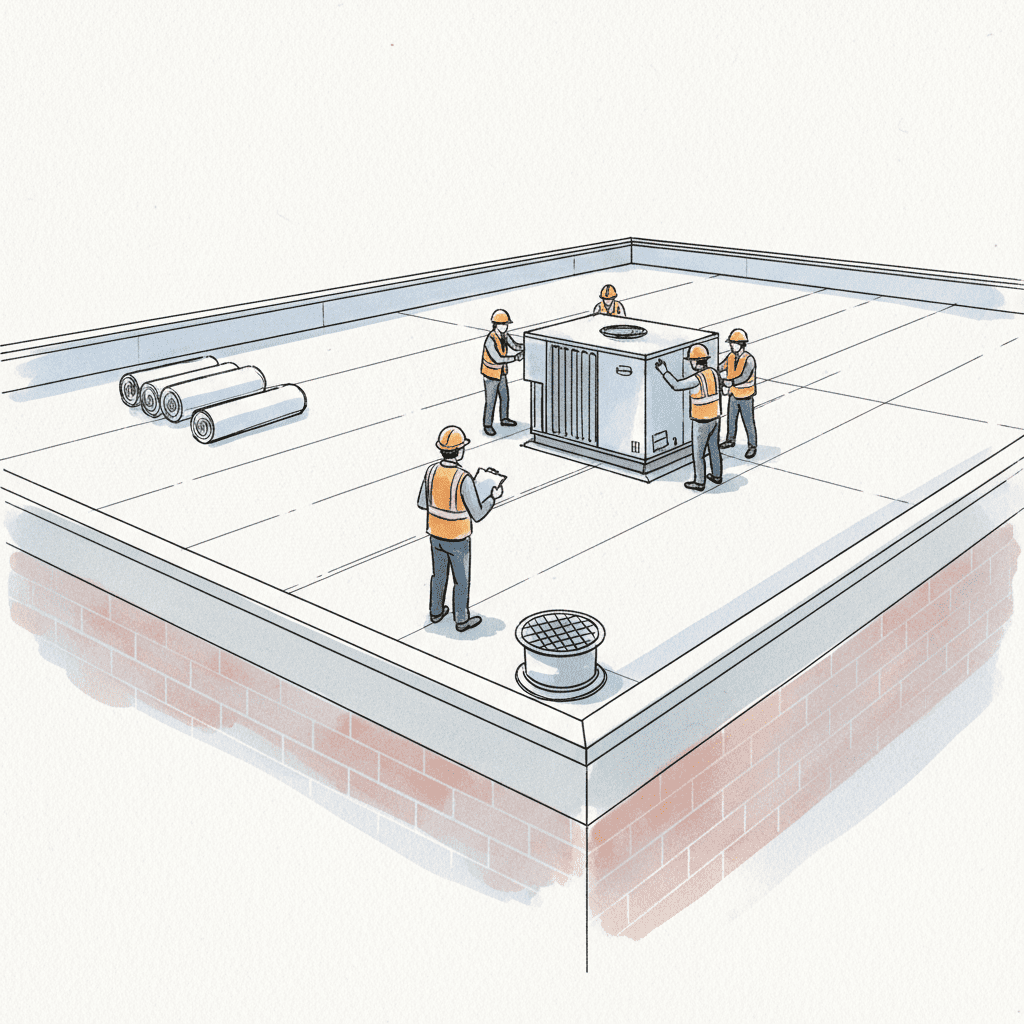
A roof is the top covering of a building, a complete system comprising all materials and constructions necessary to support it upon the structure and provide absolute protection against rain, snow, sunlight, extreme temperatures, and wind. It is not a single component, but an integrated assembly of systems engineered for a single purpose: environmental isolation and structural preservation. Understanding its function from an engineering and economic perspective is the first step toward making a sound investment.
A Roof System’s Primary Mandate: Total Environmental Protection
A roof’s value is measured by its ability to execute its primary mandate: forming an impermeable barrier between the controlled interior of your home and the uncontrolled exterior environment. This mandate is absolute. A 99% effective roof is a 100% failure. The system must defend against three primary environmental forces without compromise.
Protection from Water Intrusion (Rain & Snow)
Water is the primary adversary of any structure. A roof’s most critical function is its waterproofing capability. This involves more than just shedding rain; it is a multi-layered defense against water in all its forms. The top covering provides the first line of defense, but the true waterproofing is accomplished by the system beneath. High-performance synthetic underlayment acts as a secondary water barrier, protecting the roof deck if the primary covering is breached. In climates susceptible to freezing temperatures, specialized ice and water shields are installed at the eaves and valleys. These self-sealing membranes prevent ice damming—a phenomenon where melting snow refreezes at the roof’s edge, forcing water back up under the shingles—from causing catastrophic roof leaks and interior damage. The entire system is engineered to manage water flow from the peak to the ground without a single point of failure.
Managing Thermal Loads (Sunlight & Temperature Extremes)
A roof is subjected to relentless thermal stress, from direct solar radiation that can elevate surface temperatures well above 150°F to frigid winter nights. Managing this thermal load is critical for both the longevity of the roofing materials and the energy efficiency of the home. A properly engineered roofing system includes a robust roof ventilation component, typically a combination of soffit and ridge vents. This system creates a continuous flow of air through the attic space, expelling super-heated, moisture-laden air. This ventilation keeps the attic temperature closer to the ambient outdoor temperature, which prevents the premature degradation of shingles from excessive heat and reduces the load on your HVAC system. In warmer climates, a radiant barrier—a layer of reflective material installed under the roof deck—can block up to 97% of radiant heat transfer, further optimizing energy efficiency and lowering utility costs.
Structural Integrity Against Wind Uplift Forces
Wind does not simply blow over a roof; it creates complex aerodynamic forces, including significant uplift pressure. As wind flows over the roof’s peak, it creates a low-pressure zone, similar to the principle that generates lift on an airplane wing. This pressure differential attempts to pull the roof covering and, in extreme cases, the underlying structure away from the building. A roof’s wind resistance is a direct function of its construction quality, specifically the fastening patterns of the shingles and the integrity of the roof deck’s attachment to the trusses. Adherence to or exceeding local building codes for wind zones is not a suggestion; it is a baseline requirement for structural survival. Every component must be installed with the correct type and number of fasteners, in the precise locations specified by the manufacturer, to withstand calculated uplift forces and prevent a cascade failure during a storm.
Deconstructing a Roof: An Analysis of Materials and Construction
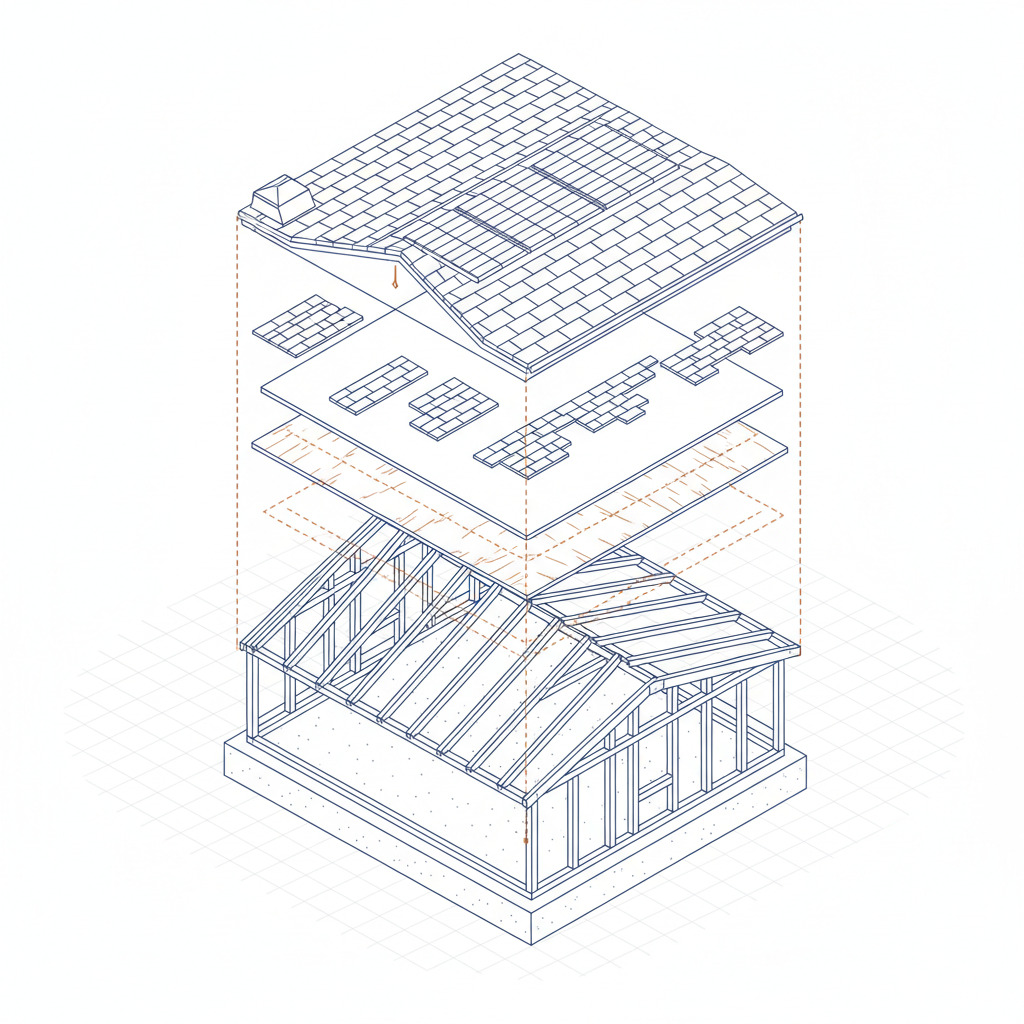
A roof is a hierarchical system. Each layer depends on the one below it for support and contributes to the protection of the layers above it. A failure at any point in this assembly compromises the entire system. Understanding this vertical integration is essential to grasping why material selection and installation precision are non-negotiable.
The Structural Foundation: Decking, Trusses, and Uprights
The foundation of any roof system is the structural frame, composed of trusses or rafters that span the building’s walls. This framework provides the primary structural support and dictates the roof’s shape and slope. Secured to this framework is the roof deck, typically made of oriented strand board (OSB) or plywood sheathing. The deck must be solid, stable, and correctly fastened. It is the canvas upon which the entire weatherproofing system is built. A compromised, rotted, or improperly secured deck guarantees the premature failure of any roofing material installed over it, regardless of that material’s quality.
The Weatherproofing Layers: Underlayment and Specialized Barriers
Between the structural deck and the final roof covering lie the critical weatherproofing layers. This is where the battle against water intrusion is truly won. Modern systems have moved beyond simple asphalt felt to high-performance synthetic underlayment. This material is lighter, significantly stronger, more water-resistant, and provides superior protection during and after installation. At all perimeters, penetrations (pipes, vents), and valleys, an ice and water shield is applied directly to the deck. This is a peel-and-stick membrane that seals around the shanks of roofing nails, creating a watertight gasket. The system is completed with metal components like drip edge, which directs water away from the fascia, and flashing, which seals the joints around chimneys, skylights, and walls. These layers work in concert to create a fully waterproofed substrate before a single shingle is installed.
The Top Covering: Material Selection and Performance Metrics
The top covering is the most visible component and the one that endures the most direct environmental abuse. The choice of material is a critical decision that balances aesthetics, budget, and long-term performance objectives. Each option presents a different calculation of initial investment versus life cycle cost. A meticulous analysis of performance metrics is required.
| Material | Typical Lifespan (Years) | Impact Resistance | Initial Cost (per sq. ft.) | Key Consideration |
|---|---|---|---|---|
| Architectural Asphalt Shingles | 25-30 | Good (Class 3/4 available) | $$ | Excellent balance of cost, aesthetics, and performance. Installation quality is paramount. |
| Standing Seam Metal | 50+ | Excellent (resists hail, fire) | $$$$ | High initial investment for superior longevity, energy efficiency, and low maintenance. |
| Natural Slate Tiles | 100+ | Excellent (fireproof) | $$$$$ | A permanent roofing solution. Requires specialized installers and structural support. |
The Economics of a New Roof: Calculating Total Cost of Ownership (TCO)
A roof is not a purchase; it is a capital investment in the structural integrity of your property. Evaluating this investment based solely on the initial roofing estimate is a critical financial error. The only rational metric is Total Cost of Ownership (TCO), which amortizes the full life cycle cost of the system over its expected lifespan. This calculation provides a clear, data-driven basis for decision-making.
Initial Investment: Materials, Labor, and Project Management Fees
The upfront cost of a roof replacement is a function of several key variables. Material costs are determined by the specific top covering, underlayment, and components selected. Labor costs are a function of the roof’s complexity, slope, and the skill level of the installation crew. Beyond these are essential project overheads, including permit fees, debris disposal, and the cost of comprehensive insurance. A transparent proposal will delineate these costs clearly. The project management fee, while sometimes viewed as an ‘extra’, is the cost of ensuring the project is executed predictably, on schedule, and to exact specifications—it is the cost of eliminating chaos.
Long-Term Variables: Maintenance, Repairs, and Lifespan Projections
The initial investment is only part of the TCO equation. The long-term variables are what differentiate a low-cost roof from a high-value one. A system installed with superior materials and precision craftsmanship will have minimal maintenance requirements and a low probability of unscheduled repairs. Its projected lifespan, backed by a robust manufacturer and workmanship warranty, can be confidently factored into the TCO calculation. A poorly installed system, conversely, begins depreciating immediately and carries a high probability of repair costs that drastically increase its true TCO over time. The warranty, in this case, is often voided by the same improper installation that necessitates its use.
The Hidden Costs of a ‘Low-Bid’ System: Premature Failure and Unscheduled Replacements
The ‘low-bid’ roofing model is predicated on cost-cutting at every stage, a practice that directly transfers risk to the homeowner. The use of substandard materials, such as builder-grade shingles or inadequate underlayment, reduces the initial quote but guarantees a shorter service life. Improper installation—driven by rushed schedules and unskilled labor—voids manufacturer warranties and creates systemic weaknesses that lead to leaks and structural damage. The ultimate result of a low-bid system is premature failure. The initial ‘savings’ are erased by the cost of frequent repairs and, eventually, a full, unscheduled replacement. This unplanned capital expense is the true, hidden cost of prioritizing the lowest price over a predictable, engineered outcome.
Measuring Roofing ROI: Tangible and Intangible Returns
A properly executed roof replacement delivers a return on investment that extends far beyond simple shelter. The return is quantifiable across financial, energy, and risk-mitigation metrics. It is an investment that appreciates the value of your primary asset while reducing its operating and holding costs.
Financial Returns: Increased Property Value and Appraisal Impact
A new roof has a direct and positive impact on a home’s resale value. Reports consistently show that a new roof is one of the most valuable home improvement projects, often allowing homeowners to recoup a significant percentage of the cost upon sale. For a potential buyer, a new, well-documented roof system represents the elimination of a major unknown capital expenditure, making the property significantly more attractive and marketable. This translates to a higher appraisal value and strengthens your position in any real estate transaction. The enhanced curb appeal of a new roof further contributes to its positive impact on home equity.
Energy Efficiency Gains: Reduced HVAC Loads and Utility Savings
A modern roof system is an active component of your home’s thermal envelope. By integrating ‘cool roof’ technologies, such as shingles with solar-reflective granules, and ensuring a balanced attic ventilation system, a new roof can dramatically reduce thermal transfer. This lessens the burden on your HVAC system, particularly during peak summer and winter months. The result is a direct and measurable reduction in monthly utility bills. These cumulative energy savings over the lifespan of the roof contribute significantly to its overall ROI, effectively paying back a portion of the initial investment over time.
Risk Mitigation: Lower Insurance Premiums and Averted Damage Costs
A new roof, especially one using Class 4 impact-resistant shingles and built to modern wind codes, represents a significant reduction in risk for your insurance carrier. Many insurers offer substantial discounts on homeowner’s insurance premiums for homes with new, certified roofing systems. This is a direct financial return. More importantly, the new roof serves as your primary defense against catastrophic hail and wind damage. The cost of a single major water intrusion event—including remediation of water damage, mold, and structural repairs—can easily exceed the entire cost of the roof that would have prevented it. The greatest ROI is the cost of a disaster that never happens.
The RocStout Methodology: Engineering Predictability into Your Roofing Project
The roofing industry is plagued by chaos. Vague estimates, missed deadlines, poor communication, and disorganized job sites are the accepted norm. We reject this standard entirely. Our methodology is built on a single premise: to engineer chaos out of the process. We deliver a predictable, transparent, and orderly experience for clients who value precision and clarity.
Transparent Scoping and Pricing: Eliminating Financial Ambiguity
Your project begins with a comprehensive system analysis, not a guess. We provide a detailed, line-item proposal that clearly specifies the scope of work, the materials to be used, and the total fixed price. There are no hidden fees or vague allowances. Any potential changes to the scope are governed by a clear change order process that you must approve before any work is performed. We eliminate financial ambiguity so you can plan with certainty.
A complete inspection to define exact material and labor requirements for a fixed-price proposal.
You are assigned a dedicated Project Manager. All materials are ordered and logistics are confirmed.
Installation proceeds according to schedule, with daily updates and quality checks from your Project Manager.
A multi-point final inspection is conducted. All documentation, including warranties, is delivered.
Your Dedicated Project Manager: A Single Point of Contact for Absolute Clarity
Upon project commencement, you are assigned a dedicated Project Manager. This individual is your single point of contact for the duration of the project. You will not be passed between departments or left wondering who to call. Your Project Manager is responsible for the schedule, the crew, and providing you with proactive communication. You will receive regular progress reports and have a direct line for any questions. This structure provides absolute clarity and accountability.
Our Commitment to Order: A Clean, Organized, and Efficient Job Site
We view your property as our workspace, and we maintain it with professional respect. Our commitment to order is absolute. Debris is managed systematically throughout the day, not just at the end. Your landscaping, driveways, and home exterior are protected as part of our standard operating procedure. Our crews operate with an efficient workflow that minimizes disruption to your life. A clean, organized job site is not an amenity; it is a direct indicator of a disciplined, quality-focused process.
Why We Are Not the Cheapest Option (And Why That Protects You)
We must state this directly: If your primary decision criterion is finding the lowest possible price, we are not the right company for your project. Our pricing is a direct reflection of the systems we have built to deliver a predictable, stress-free outcome. It is the cost of investment protection.
Our price includes:
- Superior Materials: We do not use builder-grade or substandard components. We specify materials with proven performance and robust manufacturer warranties.
- Skilled Labor: Our installers are trained, certified professionals, not temporary laborers. We pay them accordingly because their skill is your primary guarantee of a correct installation.
- Dedicated Project Management: The cost of your Project Manager is included because constant oversight and clear communication are essential, not optional.
- Comprehensive Insurance: We carry insurance that fully protects you, our crews, and your property. This is a non-negotiable cost of doing business responsibly.
Choosing RocStout is an investment in certainty. You are paying to eliminate the financial and emotional risks associated with the chaotic, low-bid model. You are paying for a project that is done right the first time, on schedule, and with zero ambiguity. That is the long-term value we provide.