Commercial Roof Core Sampling: A Forensic Diagnostic for Capital Asset Planning
Commercial roof core sampling is a forensic diagnostic procedure that extracts a physical cross-section of your roof assembly, providing empirical data to verify its composition, quantify moisture saturation, and inform accurate capital expenditure (CapEx) planning. As a fiduciary advisor responsible for capital asset preservation, you understand that unverified assumptions are financial liabilities. This analysis replaces speculation with engineering-grade data, forming the bedrock of a responsible roof asset management strategy.
Defining the Objective: Beyond Simple Leak Detection
Standard contractors use core samples reactively, often to find the source of an existing, active leak. This is a fundamentally flawed, short-sighted approach. At RocStout, we deploy core sampling as a proactive diagnostic tool integral to root cause analysis and long-term asset lifecycle planning. The objective is not merely to patch a symptom but to understand the holistic condition of the entire roof system. This preventative maintenance and risk assessment protocol allows us to identify systemic degradation, hidden moisture, and non-compliant assemblies before they escalate into catastrophic failures, operational shutdowns, or unbudgeted capital expenditures.
Core Sample vs. Infrared Thermography: A Synergistic Approach
Infrared (IR) thermography is an invaluable non-destructive testing method for identifying thermal anomalies across a wide roof area, often indicating potential subsurface moisture. However, an IR scan alone is an incomplete diagnostic. It indicates *where* a problem might be, but it cannot confirm *what* the problem is, its severity, or its cause. Core sampling provides the necessary data validation. By taking physical cores from anomalous and control areas identified during an infrared scan, we achieve a comprehensive roof audit. The IR scan provides the map; the core sample provides the ground-truth evidence, confirming the presence and saturation level of moisture, verifying the insulation type, and assessing the structural integrity of the deck below. This synergistic approach removes ambiguity and forms the basis for a surgically precise scope of work.
Decoding the Core Sample: Translating Physical Data into Financial Intelligence
A core sample is more than a plug of roofing material; it is a historical record of the asset. Our forensic analysis translates this physical data into financial intelligence, enabling you to conduct proper due diligence, quantify potential liabilities, and calculate the true return on investment for any proposed roofing project. We analyze each layer to provide a clear, data-driven assessment of the roof system’s health and performance.
Verifying Roof Assembly Composition and Code Compliance
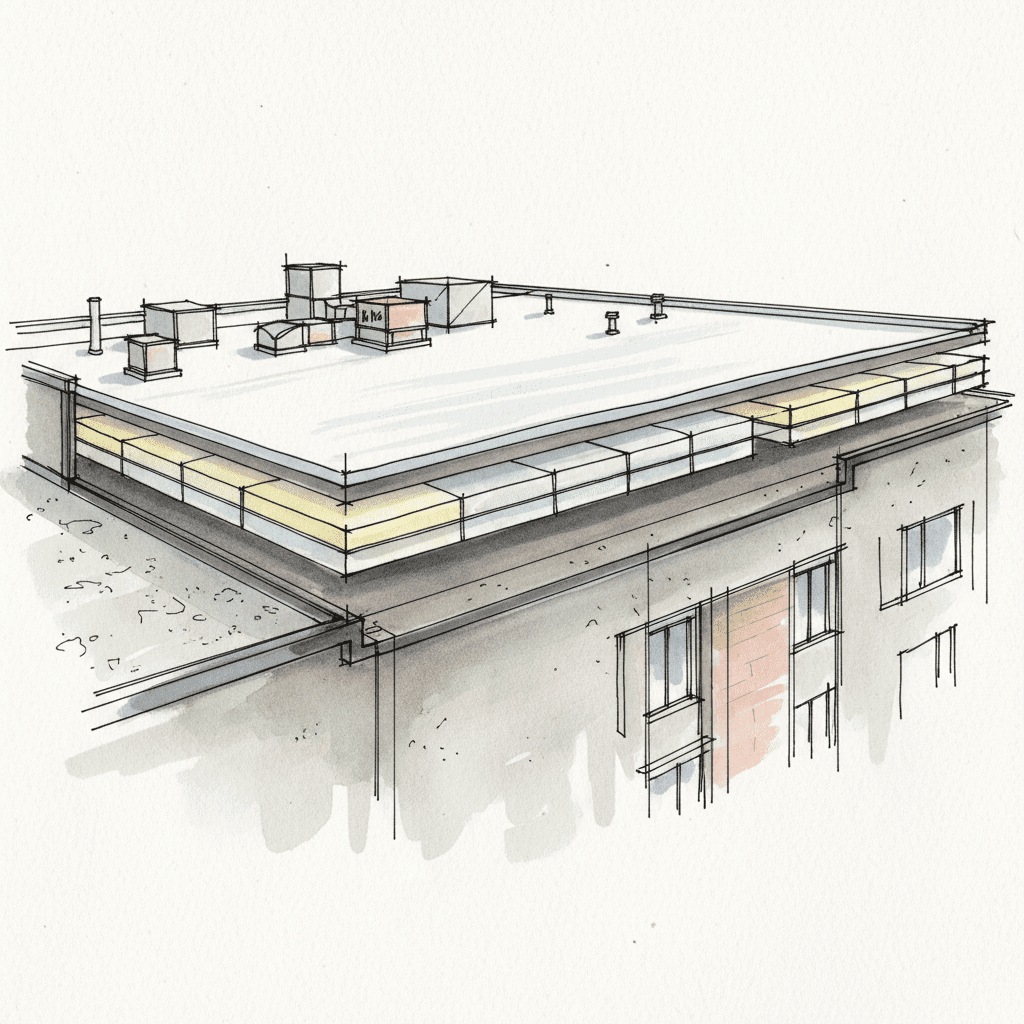
The core sample provides indisputable evidence of the roof’s construction. We verify the type and thickness of each layer, from the surface membrane (TPO, EPDM, PVC, Modified Bitumen) down to the structural deck. This process is critical for two financial reasons. First, it confirms warranty compliance. If a core reveals an unauthorized material substitution or incorrect installation method, it provides the necessary leverage for a warranty claim. Second, it ensures building code compliance. An assembly with insufficient insulation, an incorrect number of layers, or improper fastening can represent a significant undisclosed liability, particularly during a property transaction or an insurance assessment.
Quantifying Moisture Saturation in Insulation Layers
Entrapped moisture is the primary catalyst for premature roof failure and escalating operational costs. A core sample allows for gravimetric analysis (weighing the sample before and after drying) to quantify the exact moisture saturation percentage within each layer of insulation. This data is critical for assessing financial risk:
- R-Value Degradation: Water-saturated polyisocyanurate insulation loses its thermal resistance, leading to significant energy loss and higher HVAC operational expenditures.
- Steel Deck Corrosion: Persistent moisture accelerates the corrosion of metal roof decks, a severe structural risk that can necessitate a full tear-off and replacement, exponentially increasing project costs.
- Increased Structural Load: Water is heavy. A roof system retaining thousands of pounds of unaccounted-for water weight may exceed the building’s designed structural load capacity, posing a direct safety and liability risk.
The table below outlines the direct financial implications of core sample findings:
| Core Sample Finding | Technical Implication | Financial Liability / Business Risk |
|---|---|---|
| 25%+ Moisture Saturation in Insulation | Significant R-value loss; compromised fasteners. | Increased OpEx (energy costs); uninsurability; invalidates restoration options. |
| Unidentified Third Roof System | Violation of building codes (max 2 systems). | Mandatory full tear-off required; massive unplanned CapEx. |
| Poor Inter-Ply Adhesion | Reduced wind uplift resistance; blistering. | High risk of catastrophic failure during high-wind events; voided warranty. |
| Evidence of Deck Corrosion | Compromised structural integrity. | Immediate safety hazard; extensive, costly structural repairs required. |
Assessing Inter-Ply Adhesion and Material Degradation
For multi-ply systems like Modified Bitumen or BUR (Built-Up Roofing), the bond between layers is paramount for performance. Our analysis assesses the inter-ply adhesion to identify delamination or blistering. Poor adhesion is a leading indicator of premature failure, often stemming from installation error or material incompatibility. This condition severely compromises the roof’s wind uplift resistance, making the asset dangerously vulnerable during severe weather. Identifying this weakness allows for corrective action before a minor deficiency becomes a total system failure.
Strategic Triggers for Core Sample Analysis
A core sample analysis is not an arbitrary exercise; it is a strategic action triggered by specific financial and operational events. As a fiduciary partner, we recommend this protocol when the financial stakes are high and data is required to mitigate risk and protect capital.
Pre-Purchase Due Diligence: Mitigating Acquisition Liability
During an asset acquisition, the roof is one of the largest potential sources of undisclosed liabilities. A simple visual inspection is insufficient. A core sample analysis conducted as part of the Property Condition Assessment provides definitive evidence of the roof’s actual condition. Discovering a saturated, non-compliant second roof system can translate into a seven-figure liability. This data provides critical negotiation leverage and allows for the accurate scoping of capital reserve studies, protecting the buyer from inheriting a significant and unbudgeted financial burden.
Warranty Claim Substantiation: Providing Objective Engineering Evidence
When a roof system fails prematurely, manufacturers and installers often deflect blame. A formal forensic report based on core sample analysis provides the objective, third-party validation required to substantiate a warranty claim. The report documents any installation errors, material defects, or deviations from the manufacturer’s specifications. This engineering evidence shifts the burden of proof and compels the responsible parties to honor their warranty obligations, protecting you from paying for their failures.
Validating Scope for Restoration vs. Full Replacement Projects
The decision between a roof restoration and a full replacement has profound capital budgeting implications. A restoration can extend an asset’s lifespan for a fraction of the cost, but it is only viable if the underlying substrate and insulation are dry and structurally sound. Attempting to overlay a new coating or membrane on a wet, compromised system is a negligent waste of capital. A core sample analysis provides the definitive data to make this critical cost-benefit analysis. It validates the decision to restore, securing ROI, or confirms the necessity of a full replacement, preventing a costly and ineffective ‘band-aid’ repair.
The Core Extraction & Analysis Protocol: Ensuring Data Integrity and Zero Disruption
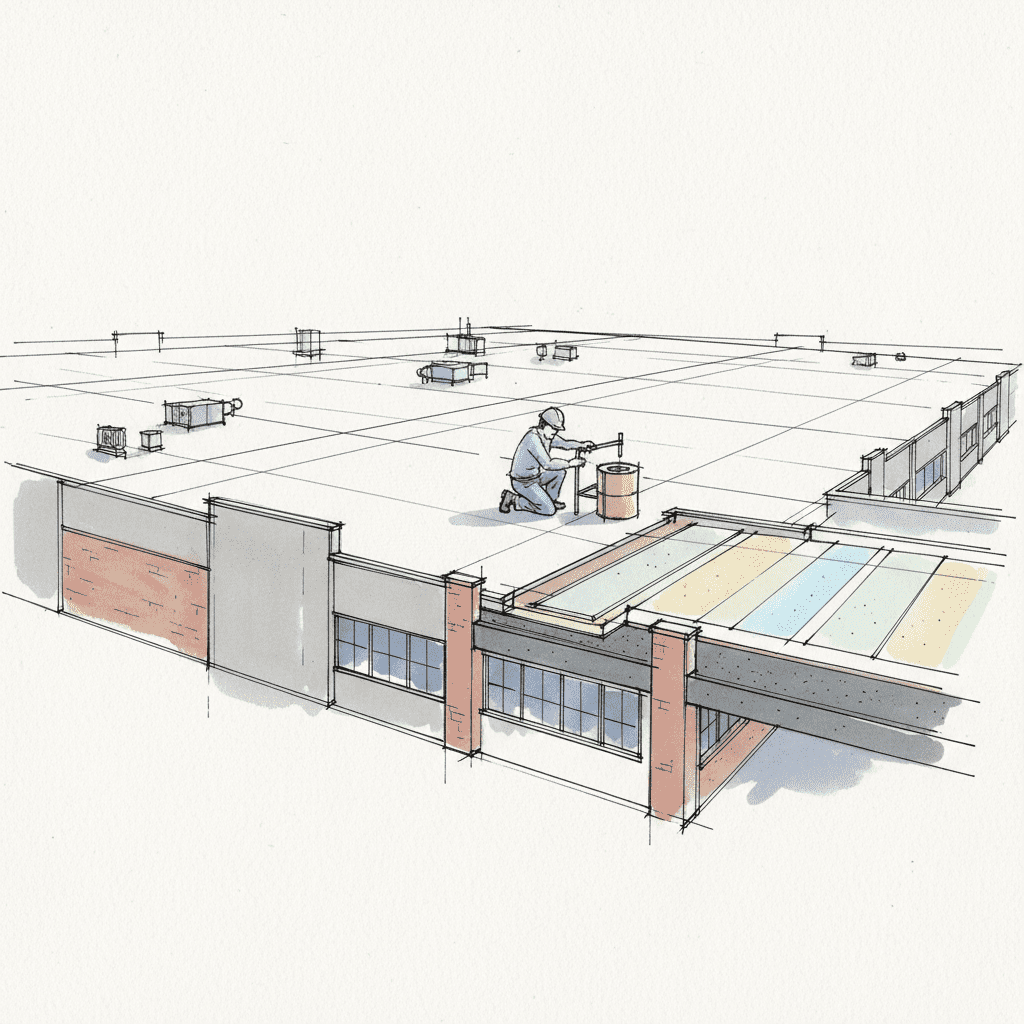
Executing a core sample analysis without disrupting tenant operations or compromising the existing roof’s integrity requires a rigid Standard Operating Procedure (SOP). Our protocol is engineered to deliver precise, actionable data while upholding our commitment to operational continuity and OSHA compliance. Choosing a contractor who lacks this procedural discipline invites risk.
From Data to Decision: The RocStout Roof Asset Management Framework
Data is only valuable when it drives intelligent financial decisions. At RocStout, core sample analysis is not a standalone service; it is a foundational component of our comprehensive Roof Asset Management Framework. We translate complex engineering data into fiscal certainty and operational continuity for the asset managers we serve.
Integrating Core Sample Data into Multi-Year Lifecycle Planning
The forensic report becomes a key input for your long-term CapEx forecasting. The data allows us to model the roof’s total cost of ownership, prioritize capital allocation across a portfolio, and develop a multi-year budget that replaces reactive spending with a predictable, proactive asset preservation plan. This financial modeling provides the fiscal certainty required for effective leadership and management.
A Data-Driven Scope of Work to Eliminate Costly Change Orders
The single greatest threat to a capital budget is scope creep fueled by unforeseen conditions. Because our core analysis provides a complete picture of the existing assembly, we engineer a scope of work with surgical precision. This detailed, line-item approach eliminates the costly change orders and project delays that plague the commercial roofing industry. We provide a firm, predictable expenditure based on empirical data, not assumptions. This is our commitment to ‘No Surprise’ billing.
Our Commitment to Operational Continuity and Tenant Communication
We understand that a roofing project’s true cost includes the potential for operational disruption. Our entire methodology is built around minimizing this impact. We develop detailed logistics, safety, and tenant communication plans before any work begins. Adherence to schedule, strict OSHA safety protocols, and clear communication with your facility management team and tenants are not afterthoughts; they are integral to our standard operating procedure. We manage the project so you can manage your business, ensuring your asset remains productive and profitable throughout the process.