The Financial Imperative of Proactive Roof Asset Management
Commercial Roof Asset Management is a fiduciary discipline that treats your building’s roof not as a recurring maintenance expense, but as a long-term financial asset requiring strategic capital planning to maximize its service life and minimize total cost of ownership. It is the transition from a reactive, unpredictable cost center to a managed, predictable component of your capital budget. For the Facility Manager or CFO burdened with preserving asset value, this methodology is the only logical path to fiscal certainty and operational stability.
Transitioning from Reactive Expense to Proactive Capital Preservation
The standard industry approach of reactive maintenance—addressing leaks only after they have caused interior damage—is a demonstrable financial liability. This “run-to-fail” model subjects your operational budget (OpEx) to unpredictable shocks, disrupts tenants, and damages inventory. Each emergency call-out carries a premium cost and only addresses a symptom, not the underlying system degradation. This is the financial penalty of deferred maintenance. A proactive capital preservation strategy, by contrast, utilizes scheduled inspections and preventative actions to control costs and extend the asset’s lifecycle. It converts an unpredictable operational expense into a planned and manageable capital expenditure (CapEx), directly preserving the building’s valuation and mitigating risks before they impact your operations.
| Metric | Reactive “Break-Fix” Model | Proactive Asset Management Model |
|---|---|---|
| Budget Impact | Unpredictable, high-cost emergency OpEx | Planned, predictable, lower-cost CapEx/OpEx |
| Asset Lifespan | Significantly shortened (Average 13-15 years) | Maximized (Can extend to 25+ years) |
| Risk Profile | High: Interior damage, tenant disruption, liability | Low: Mitigated through scheduled inspections & compliance |
| Total Cost of Ownership | Up to 2-3x higher due to premature replacement | Minimized through strategic lifecycle management |
Calculating the ROI of a Structured Roof Management Program
The return on investment for a structured program is measured in avoided costs and extended asset life. A comprehensive lifecycle cost analysis consistently demonstrates that preventative maintenance investments dramatically reduce the probability of premature replacement, which is the single largest capital event in a roof’s lifecycle. Furthermore, maintaining warranty compliance through documented professional inspections is a contractual necessity to protect your initial investment. An engineered management program also identifies and corrects insulation saturation, preserving the intended R-value and directly lowering HVAC-related energy expenditures. The net present value (NPV) of these combined benefits—avoided repairs, extended asset life, energy savings, and warranty protection—far exceeds the modest cost of the program itself.
Mitigating Legal and Financial Liability Through Systemized Compliance
A commercial roof is a nexus of liability. Systemized management is a risk mitigation strategy that directly addresses this exposure. Adherence to OSHA standards is not optional; it is a legal requirement that protects your firm from costly violations and potential litigation in the event of an incident. Our protocols ensure every project operates under strict safety compliance. Similarly, ensuring the roofing system meets or exceeds current building code requirements is critical for insurance underwriting and legal due diligence during property transactions. Failure to maintain a compliant and well-documented roof system exposes the asset owner to significant tenant liability from water damage and operational disruption. We manage these compliance obligations as a core component of our service.
The Four Pillars of a Fiduciary-Grade Roof Management System
A defensible and effective asset management program is not arbitrary. It is built upon a foundation of data-driven protocols designed to provide a clear, objective assessment of the asset’s condition and a forward-looking plan for its preservation. This system is composed of four non-negotiable pillars.
Pillar 1: Foundational Roof Condition Assessment (RCA)
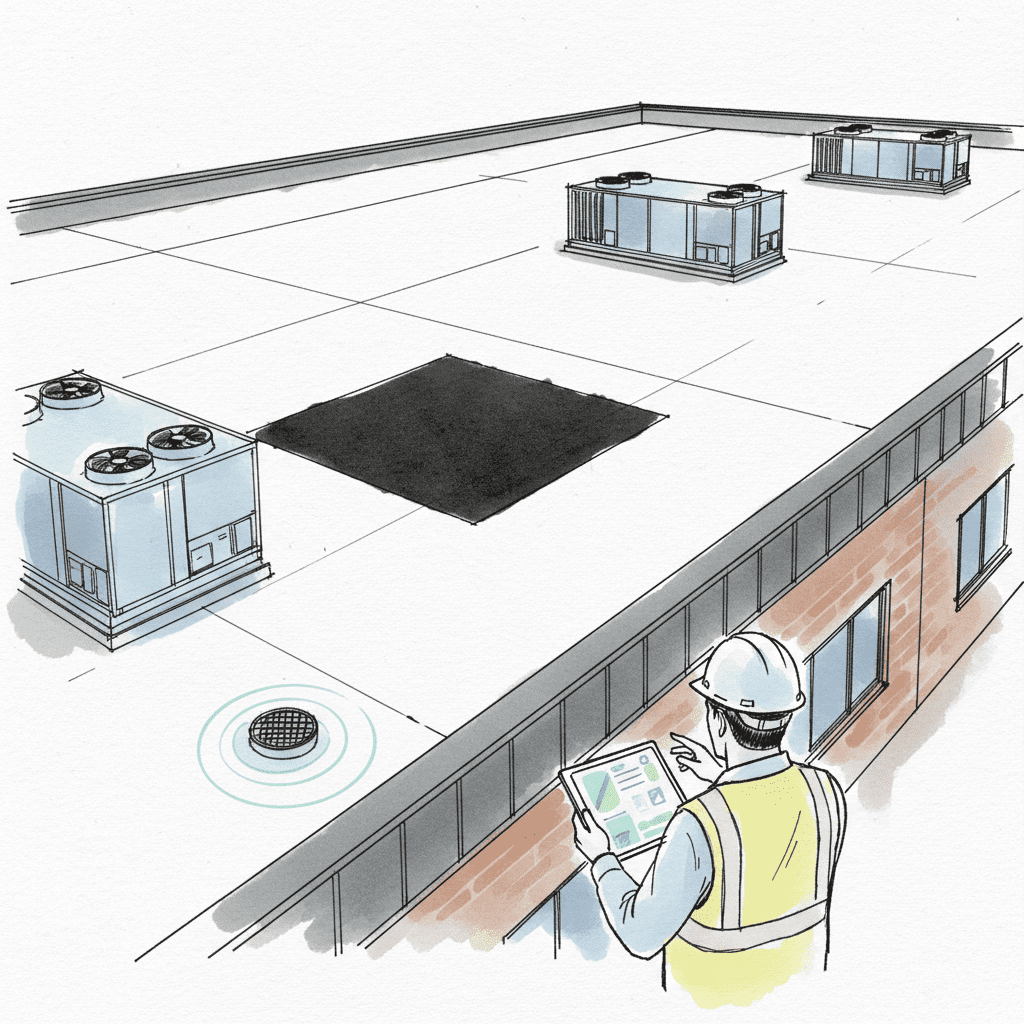
The RCA is the baseline audit of your asset. It is a forensic, data-gathering process that provides the objective information required for strategic planning. Our engineers utilize non-destructive testing, including infrared thermography, to identify subsurface moisture without invasive measures. Core analysis is performed to confirm the composition and condition of the existing system layers, and high-resolution drone surveys map the entire roof surface, identifying deficiencies with precision. A structural deck inspection confirms the integrity of the underlying support. This is not a cursory visual check; it is a comprehensive diagnostic that forms the bedrock of all future financial decisions.
Pillar 2: Centralized Digital Asset Database
Data has no value if it is not accessible and actionable. We establish a centralized digital portal for each managed asset. This database serves as the official system of record, housing all critical documentation: original installation details, warranty tracking information, a complete maintenance log and repair history, and a photographic inventory of all components. This system provides a transparent, auditable trail of due diligence, which is invaluable for insurance claims, warranty enforcement, and property sale negotiations. It transforms scattered paperwork into a managed, accessible asset intelligence hub.
Pillar 3: Scheduled Preventative Maintenance Protocols
Preventative Maintenance (PM) is the execution arm of the asset management strategy. These are not random acts of repair, but scheduled, systematic protocols based on engineering best practices. Our standard PM service includes, at a minimum: debris removal and membrane cleaning to prevent organic damage; comprehensive drain inspection and clearing to ensure positive drainage and prevent water ponding; forensic inspection of all seams and flashings, the highest-risk areas for water ingress; and detailed inspection of all rooftop penetrations. These scheduled interventions are the most cost-effective mechanism for extending the service life of the roof asset.
Engineering Analysis: Identifying Failure Points to Prevent Catastrophic Loss
From an engineering perspective, roof failure is rarely a sudden event. It is the culmination of predictable degradation at key stress points. Our analysis focuses on identifying and fortifying these high-risk zones before they can lead to water intrusion, inventory damage, and operational shutdown.
Seam & Flashing Integrity: Fortifying Against Water Ingress & Inventory Damage
Over 80% of roof leaks originate at seams and flashings. These areas are subject to immense stress from thermal expansion and contraction, building settlement, and UV degradation. Our inspections scrutinize the weld integrity of thermoplastic membranes (TPO, PVC) and the adhesive integrity of thermoset systems (EPDM). We analyze sealant condition at termination bars and flashing details around parapet walls and curbs. By proactively reinforcing these vulnerable points, we prevent the primary cause of water infiltration that damages inventory and creates slip-and-fall liabilities.
Sub-Surface Moisture Detection: Preserving R-Value and Structural Integrity
Water trapped within a roofing system is a silent and destructive force. It triggers R-value degradation as saturated insulation loses its thermal resistance, leading to a direct increase in energy loss and higher utility costs. More critically, persistent moisture leads to deck corrosion, compromising the structural integrity of the entire building envelope. We use thermal imaging and other moisture survey techniques to detect this hidden threat. Identifying and remediating insulation saturation is fundamental to preserving both the operational efficiency and the structural soundness of your asset.
Roof Penetration Audits: Securing High-Risk Leak Zones
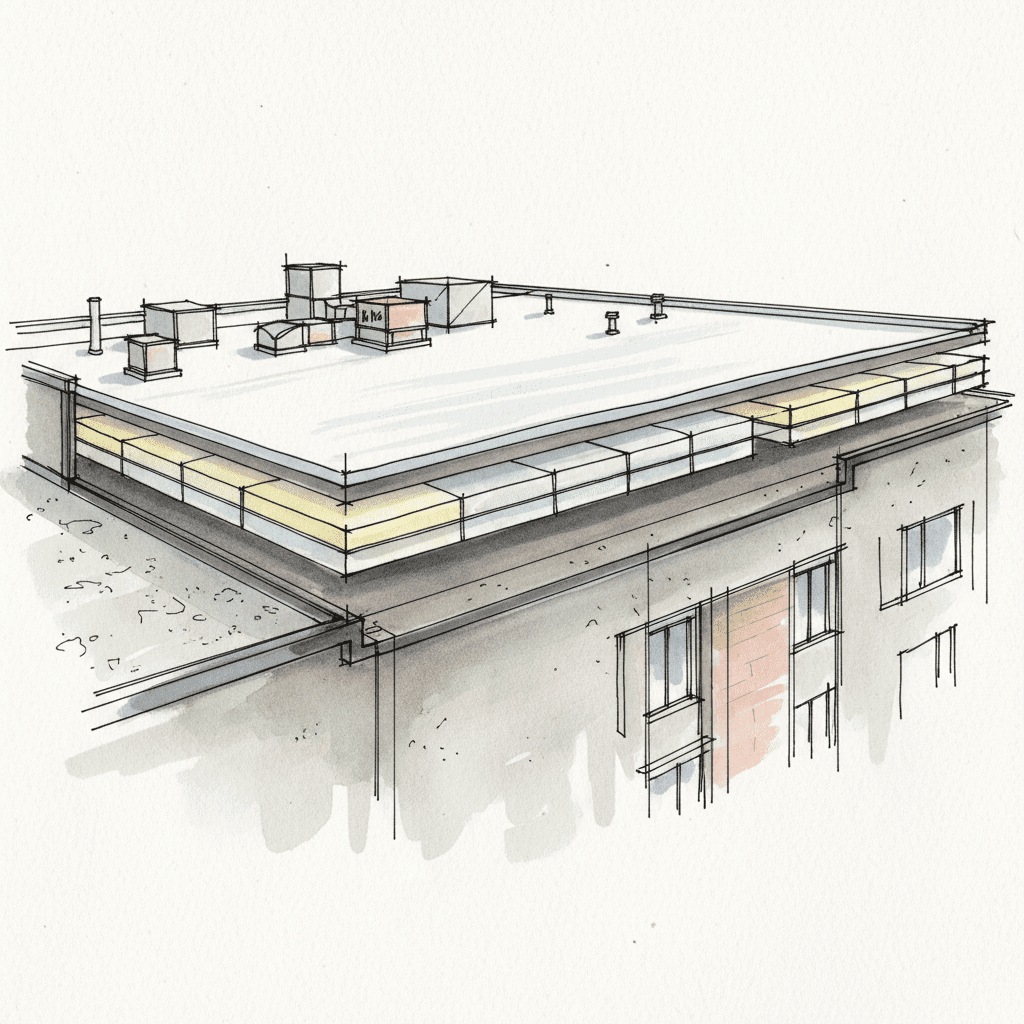
Every HVAC curb, pipe penetration, and skylight is a manufactured breach in the roofing membrane that requires specialized detailing to remain watertight. These areas are subject to constant vibration, differential movement, and sealant fatigue. Our penetration audits are a systematic review of these high-risk zones. We manage traffic pathways to prevent unauthorized foot traffic from damaging sensitive components and analyze equipment for excessive vibration that could compromise seals. Securing these points is a critical step in achieving a truly resilient and leak-free roofing asset.
Strategic Capital Planning: From Condition Data to Budgetary Certainty
The ultimate goal of collecting detailed condition data is to empower decisive and accurate financial planning. We translate engineering findings into a clear, actionable capital plan that provides budgetary certainty and aligns with your long-term financial objectives for the asset.
Decision Matrix: Repair, Restore, or Replace for Maximum Asset Value
Based on the RCA data, we present a clear decision matrix. Minor deficiencies may warrant targeted repairs. If the primary membrane is sound but showing signs of age, a fluid-applied roof restoration using advanced silicone or acrylic coatings can extend the asset’s life by 10-20 years at a fraction of the cost of replacement, often classifying as a maintenance expense rather than a capital improvement. When a system has reached the end of its functional service life, a full roof replacement is the only responsible option. We explicitly advise against overlays that conceal saturated insulation or a deteriorating deck, as this practice merely defers a larger, more costly liability. Our recommendation is always guided by maximizing long-term asset value.
Developing a 5-Year Capital Expenditure Forecast for Your Portfolio
Our process culminates in the delivery of a 5-year capital expenditure forecast. This document leverages predictive modeling based on the current condition index and expected degradation rates of your roofing assets. It allows for proactive, long-term budgeting, eliminating the financial disruption of unexpected roof failures. For portfolio managers, this provides a clear roadmap for capital allocation across multiple properties, enabling you to plan and provision for major projects years in advance. This is the definition of fiscal certainty.
The RocStout Methodology: Executing with Operational and Fiscal Discipline
A plan is worthless without disciplined execution. Our methodology is engineered to eliminate the primary concern of every facility manager: operational disruption. We function as a fiduciary partner, contractually obligated to protect your operations, your tenants, and your budget.
Our Standard Operating Procedure for Zero-Disruption Project Execution
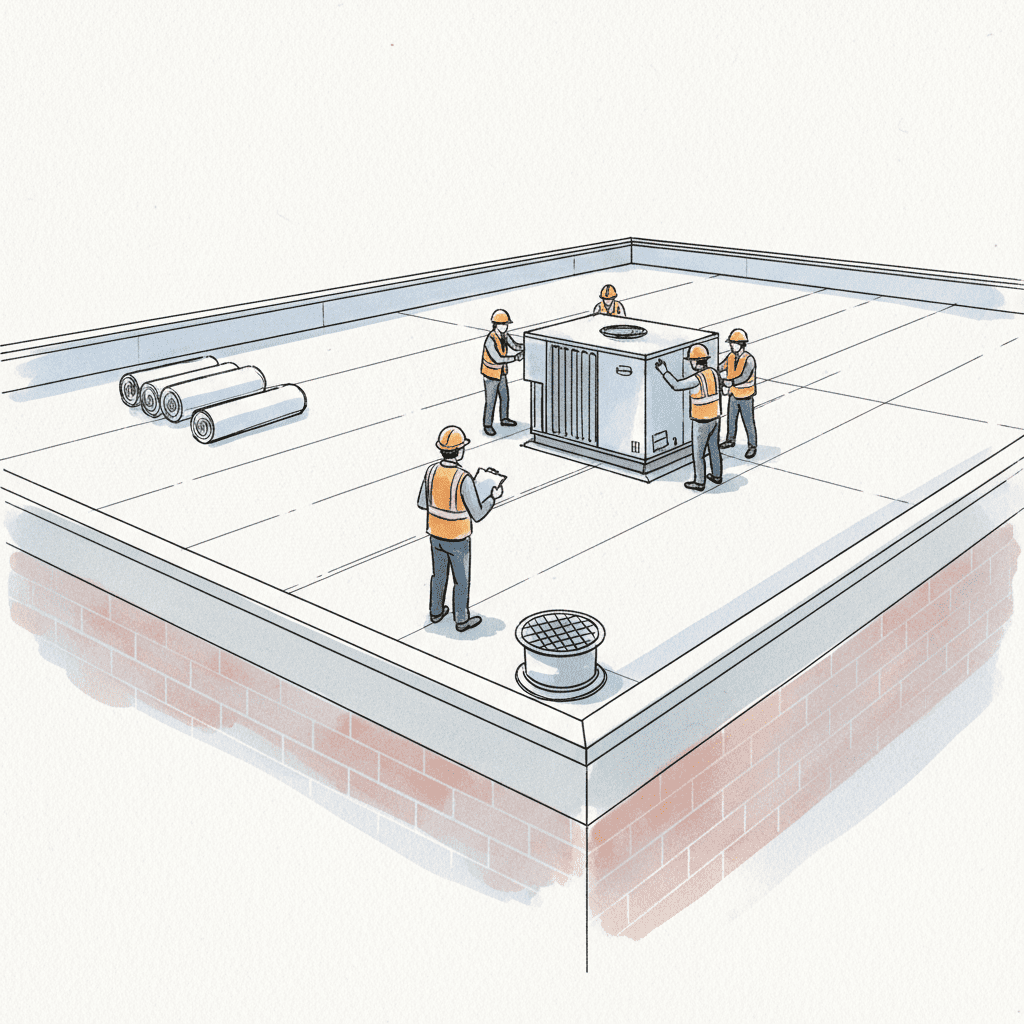
We understand that time is money and that your facility must remain operational. Our execution is governed by rigid Standard Operating Procedures (SOPs) that ensure seamless project delivery without impacting your core business. This is our non-negotiable standard of care.
Achieving Fiscal Certainty with Transparent, Line-Item Reporting
We reject the industry standard of vague, lump-sum proposals. Our commitment to fiscal certainty begins with a detailed, line-item proposal that specifies materials, labor, and logistics costs. This transparency is the foundation of a trust-based partnership. Any potential changes in scope are governed by a strict change order protocol, requiring your written authorization before any additional work is performed. There are no financial surprises. The final project closeout package includes all lien waivers, permits, and warranty documents, providing a clean, auditable record that satisfies the most stringent accounting requirements. This financial discipline is central to our role as your fiduciary advisor.