The Financial Impact of Water Ingress in Multifamily Assets
Mitigating liability from tenant-reported roof leaks is a non-negotiable fiduciary responsibility for multifamily asset managers, focused on preserving capital value, ensuring tenant habitability, and preventing catastrophic financial exposure. A tenant’s call about a water stain is not a maintenance ticket; it is the preliminary notification of a potential failure in a multi-million-dollar asset’s primary defense system. Treating it as anything less is a direct invitation to operational disruption, legal challenges, and accelerated capital depreciation. Deferred maintenance on a roofing system is a liability on the balance sheet, one that grows exponentially with every rain event.
The standard industry response—dispatching the lowest-cost roofer for a quick patch—is a fiscally irresponsible strategy. It prioritizes short-term expense control over long-term asset preservation and risk management. This approach fails to address the underlying cause of water ingress, guaranteeing a recurring problem and compounding the ultimate cost of resolution.
Quantifying the Total Cost of Ownership: Beyond the Initial Patch Repair
A fiduciary advisor evaluates the total financial impact, not just the initial repair invoice. A persistent leak, even a minor one, triggers a cascade of compounding costs that are often overlooked in preliminary damage assessments. The true cost of water intrusion extends far beyond the surface-level repair and must be factored into your capital reserve planning.
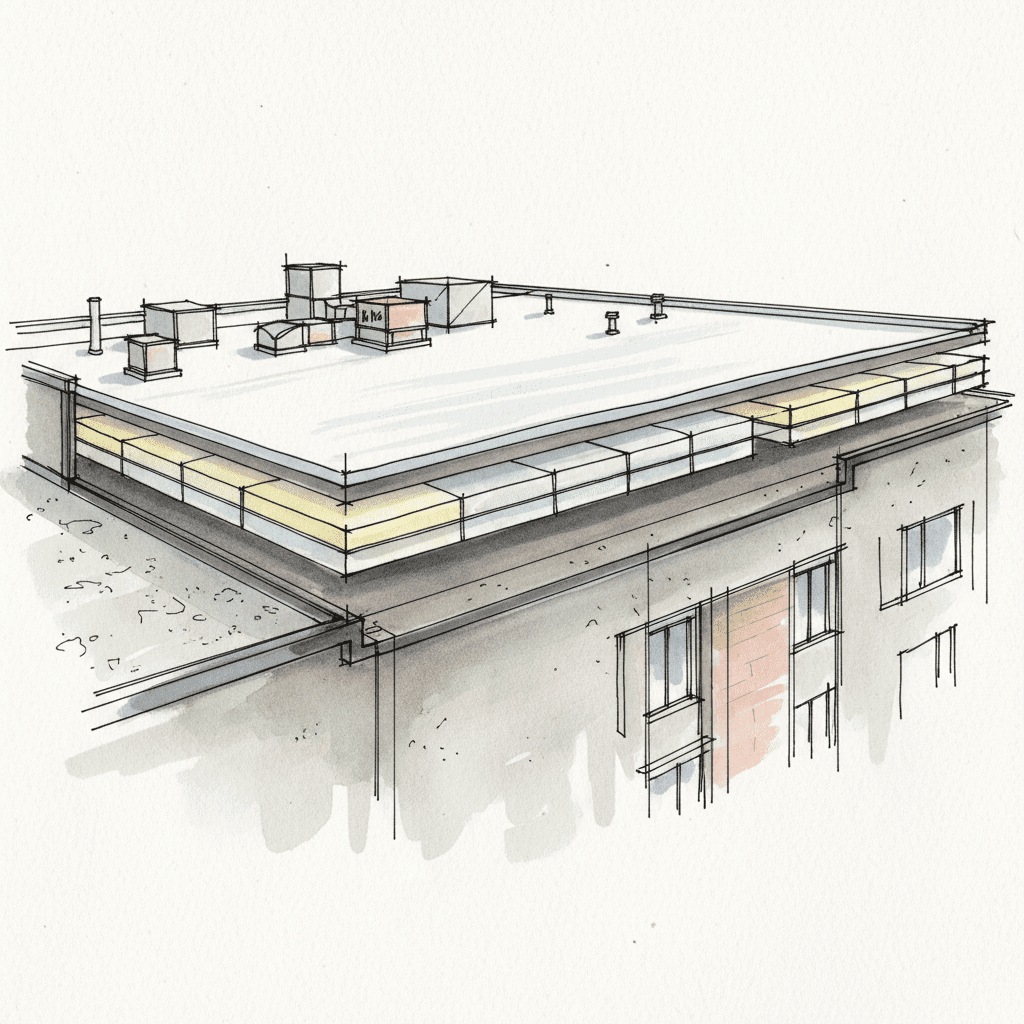
- Structural Damage: Water that bypasses the roofing membrane saturates insulation, rendering it thermally useless and adding significant weight to the roof deck. It then corrodes steel decking, weakens wooden joists, and degrades the structural integrity of the building itself. What begins as a leak becomes a major structural engineering problem.
- Mold Remediation: The presence of moisture within the building envelope creates ideal conditions for mold and microbial growth. Mold remediation is a highly specialized, expensive, and disruptive process that often requires tenant displacement and carries significant premise liability risks.
- Energy Efficiency Loss: Saturated insulation has a drastically reduced R-value. This thermal degradation leads to higher HVAC operational costs as the building struggles to maintain temperature, directly impacting net operating income (NOI).
- Interior Finish Damage: The visible signs of a leak—damaged drywall, ruined flooring, and compromised paint—are often just the final symptoms of a much larger issue. The cost to repair interiors across multiple units can quickly exceed the cost of a proper roof repair.
Tenant Retention and Liability: The Unseen Costs of Water Intrusion
The financial consequences of roof leaks extend directly to tenant relations and legal exposure. In the multifamily sector, ensuring a safe and habitable environment is a core legal obligation. Failure to adequately address water intrusion can trigger significant liabilities that impact both your reputation and your bottom line.
- Habitability Claims: Most jurisdictions have strict laws regarding a landlord’s “implied warranty of habitability.” A persistent roof leak is a clear breach of this warranty, empowering tenants to withhold rent, break leases, or initiate legal action.
- Reputational Risk: Negative online reviews and word-of-mouth stemming from unresolved maintenance issues directly impact vacancy rates and your ability to attract qualified tenants. A reputation for neglect is difficult and expensive to reverse.
- Legal Exposure: Beyond habitability claims, water intrusion can lead to slip-and-fall lawsuits (premise liability) and claims for damaged personal property. These legal battles are costly, time-consuming, and can negatively impact your insurance premiums.
Forensic Leak Diagnosis: Systematic Source Identification Protocols
Effective leak resolution is not guesswork; it is a systematic, engineering-based process of forensic analysis. The location of a water stain on a ceiling rarely corresponds to the entry point on the roof. Water travels, often following structural members or conduits for long distances before becoming visible. Our standard operating procedure rejects superficial inspections in favor of a comprehensive diagnostic protocol designed to identify the precise water intrusion pathway and assess the full scope of moisture contamination within the building envelope.
Analyzing Common Failure Points: Flashing, Seams, and Roof Penetrations
Our analysis begins with a meticulous examination of the most common points of failure on commercial low-slope roofing systems. These areas bear the highest stress and are responsible for the vast majority of water intrusions.
- Parapet Wall Flashing: The termination point where the roof membrane meets a vertical wall is a critical transition. Improperly installed or degraded flashing is a primary culprit.
- Seam Failure: On single-ply systems like TPO and EPDM, the integrity of welded or adhered seams is paramount. Thermal expansion and contraction, UV degradation, and installation defects can lead to seam separation.
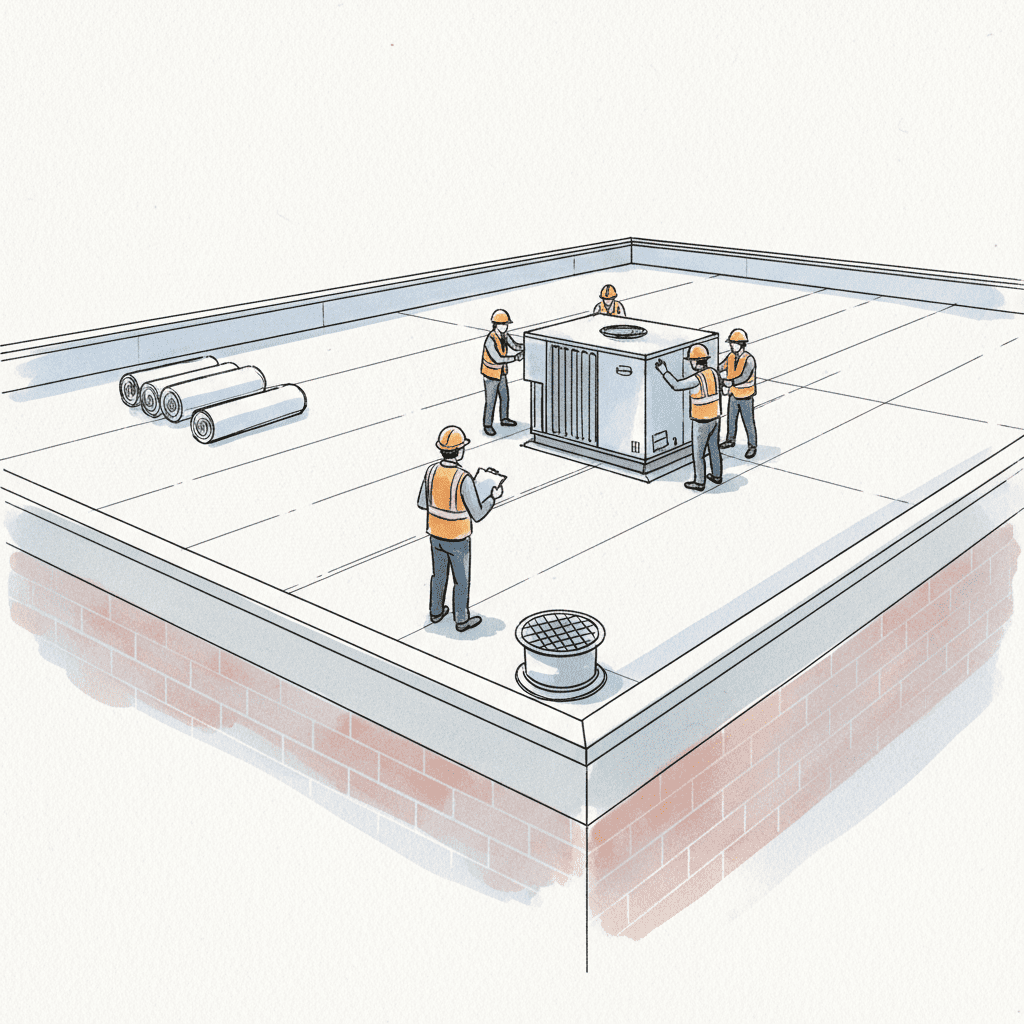
- Roof Penetrations: Every HVAC curb, plumbing vent, drain, and skylight represents a puncture in the roofing membrane that must be perfectly sealed. The flashing around these penetrations is a frequent point of failure.
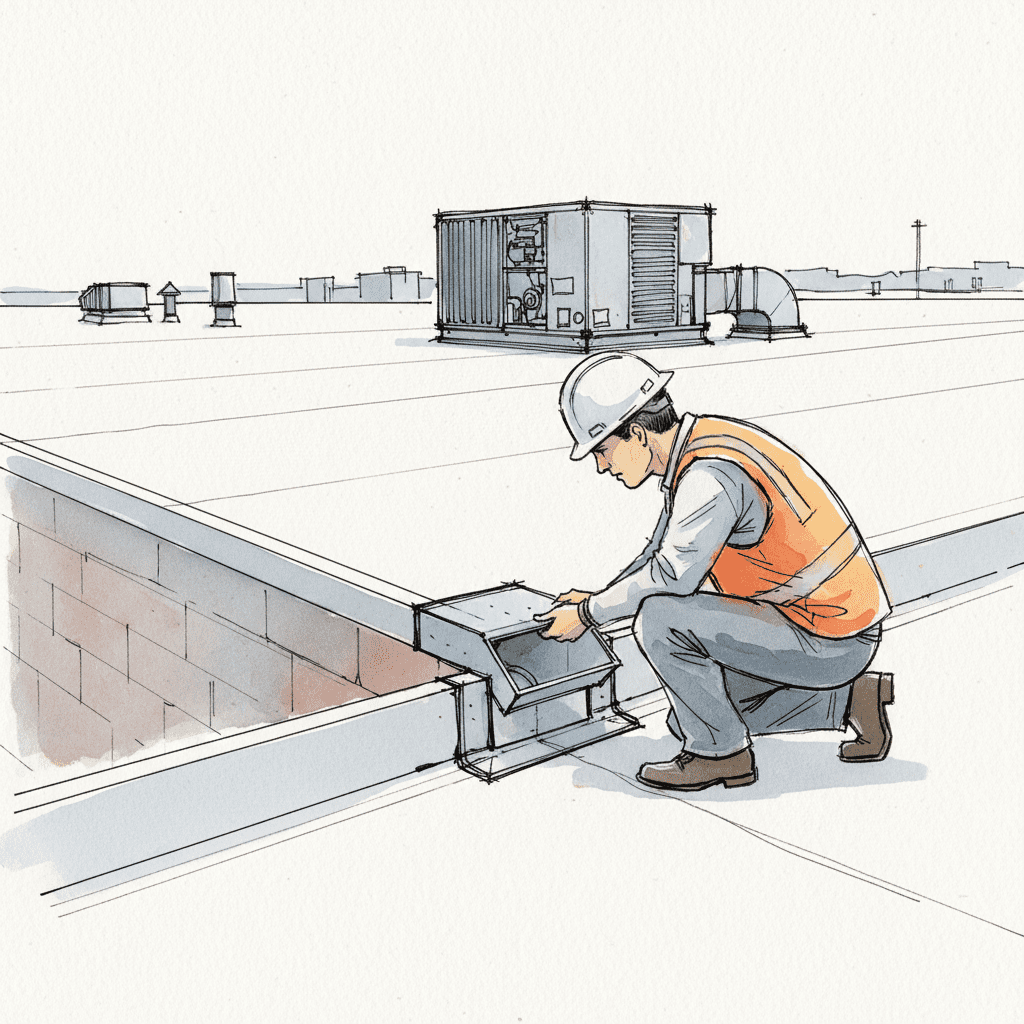
- Drainage Systems: Clogged or improperly installed drains and scuppers lead to ponding water, which adds immense structural load and chemically accelerates the degradation of roofing materials.
Advanced Diagnostic Technologies: Infrared Thermography and Moisture Mapping
Visual inspection alone is insufficient for managing a capital asset. To provide fiscal certainty, we must quantify the unseen damage. We utilize non-destructive testing technologies to map the extent of moisture saturation within the roofing assembly without invasive and costly tear-offs.
- Infrared (IR) Thermography: IR cameras detect temperature differentials across the roof surface. Wet insulation retains heat longer than dry insulation after sunset. An IR scan creates a clear, data-driven map showing the precise location and extent of subsurface moisture, allowing for surgical, targeted repairs.
- Moisture Meters & Core Sampling: Once IR thermography identifies potential problem areas, we confirm the findings with electronic moisture meters and strategic core sampling. A core sample provides a physical cross-section of the roofing assembly, verifying the type and condition of the membrane, insulation, and deck, which is critical for accurate repair or replacement planning.
Material & System Vulnerabilities in Multifamily Roofing
Understanding the inherent vulnerabilities of your specific roofing system is fundamental to proactive asset management. Each material type has a predictable lifecycle and a unique set of failure modes. As fiduciary advisors, we assess your asset based on its specific engineering, not a generic checklist. This allows for targeted maintenance and realistic capital planning.
Single-Ply Membranes (TPO, EPDM): Assessing Seam Integrity and Puncture Resistance
Thermoplastic Olefin (TPO) and EPDM are the dominant systems in modern multifamily construction. While effective, their performance is entirely dependent on installation quality and material specification.
- Seam Integrity: TPO seams are heat-welded to form a monolithic, waterproof sheet. Improper welding technique (wrong temperature, speed, or pressure) creates a latent defect that can fail years later. EPDM seams rely on adhesives, which can degrade over time from UV exposure and chemical contaminants.
- Puncture Resistance: The thickness of the membrane (typically measured in mils) is a key determinant of its resistance to punctures from foot traffic, dropped tools, or storm debris. Opting for a thinner, cheaper membrane is a classic example of value engineering that introduces long-term liability.
- UV Degradation: Over time, solar radiation breaks down the chemical composition of the membrane, causing it to become brittle and prone to cracking. This is particularly relevant for EPDM systems.
Built-Up & Modified Bitumen Systems: Identifying Blistering and Granule Loss
Multi-ply asphaltic systems like Built-Up Roofing (BUR) and Modified Bitumen (Mod-Bit) are known for their durability but are also susceptible to specific age-related failures.
- Blistering & Alligatoring: Blisters are pockets of trapped air or moisture that expand in the heat, creating voids within the roofing plies. Alligatoring refers to the pattern of cracking that appears as the asphalt ages and loses its protective oils, resembling reptile skin. Both are indicators that the system is nearing the end of its serviceable life.
- Granule Loss: The ceramic-coated granules on the top surface of Mod-Bit and cap sheets protect the underlying asphalt from UV radiation. When these granules erode and collect in gutters, it is a clear sign that the membrane is exposed and its degradation is accelerating.
The Critical Role of Drainage Design in Preventing Ponding Water
Positive drainage is a non-negotiable engineering requirement. Ponding water—water that remains on the roof for more than 48 hours—is an active threat to your asset. It adds significant, unbudgeted structural load (water weighs 5.2 lbs per square foot per inch of depth), promotes vegetative growth that can puncture the membrane, and acts as a chemical solvent, breaking down roofing materials. An effective roof asset management program must include regular inspection and clearing of all roof drains, scuppers, and gutters to ensure unimpeded water flow. Any areas of ponding indicate a structural or design flaw that must be addressed.
Repair vs. Replacement: A Capital Expenditure Decision Framework
The decision to repair, restore, or fully replace a roofing system is a critical capital expenditure (CapEx) decision that must be based on a quantitative, data-driven framework, not anecdotal advice. As your fiduciary partner, we provide a clear cost-benefit analysis grounded in life cycle cost, ROI, and long-term risk mitigation. The objective is to align the roofing strategy with the asset’s overall financial plan, whether it’s a short-term hold or a long-term income-producing property.
Evaluating Long-Term ROI: When to Restore vs. When to Replace
A simple repair is appropriate for isolated, minor damage on a roof that is otherwise in good condition. However, when systemic issues like widespread moisture saturation, membrane degradation, or seam failure are present, the decision shifts to a choice between restoration and full replacement.
A roof restoration, typically involving the application of a silicone or acrylic fluid-applied membrane, can be a viable option if the underlying insulation and deck are sound. It extends the life of the existing system and can offer significant tax advantages by being classified as a maintenance expense rather than a capital improvement. A full replacement, while requiring a larger initial CapEx outlay, resets the asset’s lifecycle, comes with a comprehensive manufacturer’s warranty, and ensures compliance with modern building codes.
| Decision Factor | Roof Restoration (Coating) | Full Roof Replacement |
|---|---|---|
| Initial CapEx | Lower (Typically 50-70% of replacement cost) | Higher |
| Asset Lifecycle Extension | 10-20 years | 20-30+ years (resets the clock) |
| Warranty | Manufacturer’s Material/System Warranty (up to 20 years) | Manufacturer’s NDL (No Dollar Limit) Warranty available |
| Tax Treatment | Often treated as a maintenance expense (expensed in one year) | Capital expenditure (depreciated over time) |
| Pre-conditions | Roof substrate and insulation must be dry and structurally sound. | Addresses all underlying issues, including wet insulation and deck rot. |
| Best For | Assets with a structurally sound roof nearing the end of its warranty term. | Assets with systemic failures, saturated insulation, or those intended for long-term hold. |
Navigating Building Code Compliance and its Impact on Roofing Projects
Building codes are not suggestions; they are legal requirements that dictate material specifications and installation methods. A failure to comply can result in fines, work stoppages, and the costly requirement to remove a newly installed roof. Key code considerations that impact project scope and budget include:
- Insulation R-Value: Energy codes frequently mandate increased insulation thickness (R-value) during a roof replacement, which can significantly affect project cost.
- Wind Uplift & Fire Ratings: The building’s location and use dictate specific ratings for wind uplift resistance and fire performance, influencing the choice of system and attachment method.
- Multiple Roof Layers: Most building codes prohibit the installation of a third layer of roofing. If two systems already exist, a full tear-off to the structural deck is mandatory.
Implementing a Proactive Roof Asset Management Program
The industry standard of reactive repair—waiting for a leak to occur before taking action—is a fundamentally flawed and costly management strategy. We advocate for a shift to a proactive Roof Asset Management Program. This approach treats your roofing system as the critical capital asset it is, utilizing preventative maintenance and strategic capital planning to maximize its service life, ensure warranty compliance, and provide predictable, long-term fiscal certainty.
Developing a Multi-Year Capital Budget for Roofing Expenditures
Fiscal certainty is achieved through proactive planning, not reactive spending. A multi-year capital budget for your roofing portfolio is an essential tool for any serious asset manager. This process begins with a comprehensive condition assessment of each roof, which is then used to develop a forward-looking maintenance and replacement schedule.
- Condition Assessment: Each roof is inspected and assigned a condition index score based on age, membrane condition, seam integrity, and flashing details.
- Budget Forecasting: Using this data, we forecast required maintenance expenditures and projected replacement timelines, allowing you to smooth out CapEx spikes and avoid unbudgeted financial shocks.
- Reserve Study Integration: Our reporting provides the necessary documentation to justify capital reserves, ensuring funds are allocated and available when major projects become necessary.
The Importance of Documentation and Warranty Management
A manufacturer’s warranty is a valuable financial instrument, but it is contingent upon proper maintenance and documentation. Failure to perform and document semi-annual inspections can void the warranty, transferring the liability for premature failure back to you, the owner. A robust asset management program includes meticulous record-keeping:
- Centralized Portal: All documentation, including initial installation records, inspection reports, maintenance logs, and warranty certificates, is stored in a centralized location for easy access.
- Warranty Compliance: We schedule and perform the required maintenance inspections to keep your manufacturer’s warranty in full force, protecting your investment.
- Vendor Accountability: Clear documentation establishes a baseline of the roof’s condition, holding all vendors (e.g., HVAC, plumbing) accountable for any damage they may cause while servicing rooftop equipment.
Executing with Precision: A Standard Operating Procedure for Leak Resolution
Our methodology is designed to eliminate the operational disruption and financial uncertainty that asset managers have come to expect from commercial contractors. We operate under a rigid Standard Operating Procedure (SOP) that prioritizes tenant well-being, site safety, and absolute fiscal transparency. This is not simply a roofing project; it is a professionally managed service designed to integrate seamlessly with your property management objectives.
Minimizing Tenant Disruption Through Proactive Communication Protocols
Operational continuity is paramount. The true cost of any capital project includes the impact on your tenants. Our project management is built around a core principle of zero tenant disruption. This is achieved through a proactive communication plan, strict adherence to schedules, and meticulous site logistics management. We define clear work zones, manage noise and debris, and ensure tenants are informed of all project milestones. We work as a respectful guest in their home, not as a typical construction crew.
Ensuring Fiscal Certainty with Transparent, Line-Item Reporting
As a fiduciary, you require absolute clarity on capital expenditures. We reject the industry-standard one-page quote in favor of a detailed, line-item proposal that specifies all material, labor, and equipment costs. Our commitment to “No Surprise” billing means the price we agree upon is the price you pay. Any necessary changes to the scope of work are handled through a formal change order management process that requires your written approval before any additional costs are incurred. This level of financial reporting provides the fiscal certainty necessary for effective capital planning and asset management.